
MDMA Prescription in Australia: A Guide to Legal Access, the Authorised Prescriber Pathway, and Patient Eligibility
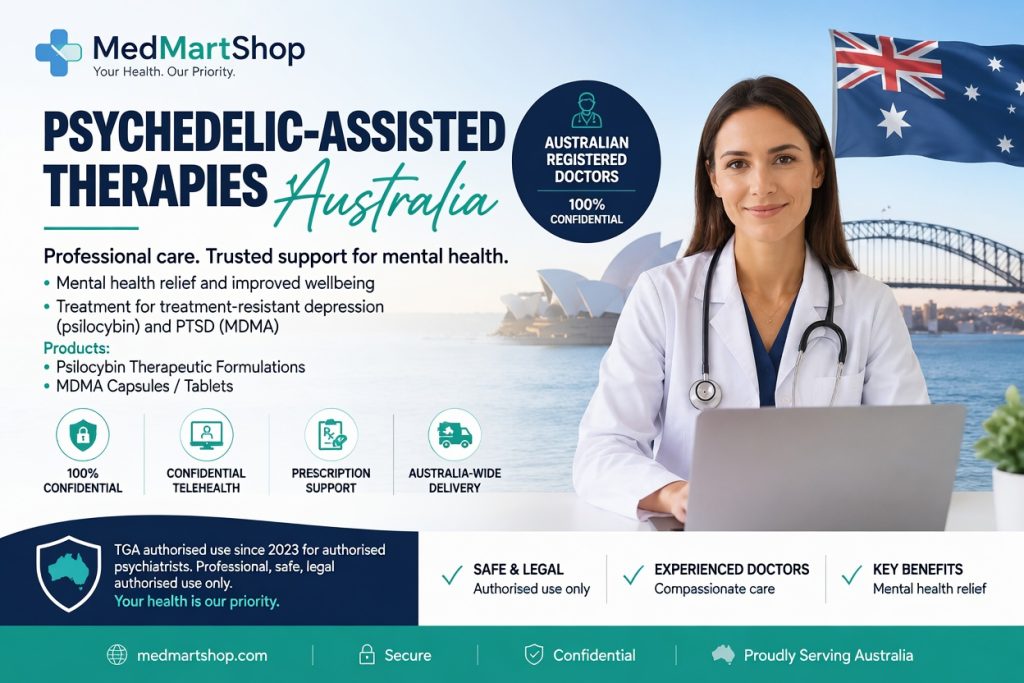
Australia has emerged as a global pioneer in psychedelic medicine. Since July 1, 2023, authorised psychiatrists have been able to prescribe MDMA for the treatment of post-traumatic stress disorder (PTSD) . This landmark decision made Australia the first country to formally recognise MDMA as a prescription medicine within a national regulatory framework . Nevertheless, access is not a simple matter of receiving a prescription. It is a highly regulated, expensive, and rigorous process reserved for specific patients. Consequently, understanding the pathway is essential for anyone considering this therapy.
What Is a Prescription for MDMA?
A prescription for MDMA is not like a standard prescription you would take to a pharmacy. MDMA is a Schedule 8 (Controlled Drug) medicine used specifically as part of Psychedelic-Assisted Psychotherapy (PAP) for PTSD . It is not available as a take-home medication. Instead, it is administered in a controlled clinical setting under the direct supervision of an authorised psychiatrist and a team of therapists . There are currently no MDMA products registered on the Australian Register of Therapeutic Goods (ARTG) . This means the products used are unapproved therapeutic goods and have not been evaluated by the Therapeutic Goods Administration (TGA) for safety, quality, and efficacy in the same way as registered medicines.
Who Can Prescribe MDMA?
The prescribing of MDMA is strictly limited to psychiatrists who meet specific criteria :
- Specialist Registration: They must be registered as a specialist psychiatrist with the Australian Health Practitioner Regulation Agency (AHPRA) .
- Fellowship: They must be a Fellow of the Royal Australian and New Zealand College of Psychiatrists (RANZCP) .
- Authorised Prescriber Status: They must be approved as an Authorised Prescriber (AP) by the TGA and their treatment protocol must be approved by a registered Human Research Ethics Committee (HREC) .
The Authorised Prescriber (AP) Pathway
To prescribe MDMA, a psychiatrist must undergo a rigorous application process . This ensures that only qualified professionals with appropriate oversight deliver this emerging therapy.
- Develop a Treatment Protocol: The psychiatrist must develop a detailed clinical protocol that outlines the patient selection criteria, treatment plan, and safety measures . This must consider that all other TGA-approved treatments have been unsuccessful for the patient .
- Obtain HREC Approval: The protocol must be reviewed and approved by a registered Human Research Ethics Committee .
- Apply to the TGA: The psychiatrist must apply to the TGA and receive specific authorisation under the Authorised Prescriber Scheme . There is no application fee for this process . A separate application is required for MDMA and psilocybin .
Who Is Eligible for MDMA Therapy?
MDMA-assisted therapy is not a first-line treatment. The Australian Clinical Practice Guideline on MDMA-assisted psychotherapy (MDMA-AP) provides clear recommendations on patient eligibility . It conditionally recommends against the routine use of MDMA-AP for PTSD . Its use should be limited to patients who meet strict criteria.
Key Eligibility Criteria:
- Age: Adults over 18 years of age .
- Diagnosis: A confirmed diagnosis of PTSD with symptoms lasting at least six months .
- Treatment Resistance: They must have had an adequate trial of first-line evidence-based treatments without success .
- Low Risk: They must be at low risk of being re-exposed to trauma during treatment .
Strong Recommendations Against Use:
- Pregnancy or breastfeeding .
- Cardiovascular disease .
- Psychotic disorder .
- Suicide-related distress .
- Using medications that may interact with MDMA .
Recent TGA Rule Changes (2026)
The TGA has recently refined the regulatory framework to address procedural challenges and expand access . The four key recommendations are intended to balance facilitating appropriate access while ensuring strong safeguards are in place to protect patient safety .
1. Psychiatrist Competency
Psychiatrists must demonstrate competency in psychedelic-assisted therapy through either clinical trial experience or supervised practice under an experienced Authorised Prescriber . This dual pathway recognises that clinical trial experience is rare .
2. Therapy Team Composition
Treatment must be administered by a “therapy dyad” consisting of the AP psychiatrist and at least one other registered healthcare practitioner . This can be a clinical psychologist, physician, mental health nurse, or occupational therapist . This change aims to address workforce shortages and improve access, particularly in rural areas .
3. Prescriber Oversight
The AP psychiatrist is responsible for patient screening, informed consent, and must be physically present during the administration of the medicine. Continuous on-site presence for the full dosing day is not required, providing flexibility to reduce costs .
4. Treatment Site Standards
Treatments can now occur in any medically supervised environment meeting defined safety standards. Sites must provide emergency resuscitation capability and be within 15 minutes of an accredited healthcare facility with an emergency department .
What Does the Treatment Involve?
MDMA-assisted therapy is a resource-intensive process. It is not a single pill. It is a comprehensive psychotherapeutic intervention that combines a small number of MDMA dosing sessions with extensive psychological support . The treatment is delivered by a “therapy dyad” consisting of the AP psychiatrist and at least one other registered healthcare practitioner . The psychiatrist is responsible for patient screening, informed consent, and must be physically present on-site during the administration of the medicine . The treatment site must meet specific safety standards . Patients will not be given a prescription for MDMA as the substance will be available at the place of treatment. The treatment will occur in an appropriate healthcare setting, under the supervision of the approved psychiatrist who will remain present throughout the treatment session .
Cost and Coverage
Cost: A major barrier to access is the cost, which can be approximately $20,000 to $30,000 per treatment course . This high cost reflects the labour-intensive nature of the therapy, which involves multiple clinicians and extended sessions .
Coverage: Reimbursement is expanding . Public coverage includes the Department of Veterans’ Affairs (DVA) for eligible veterans, the National Disability Insurance Scheme (NDIS), and some WorkCover schemes . Private coverage includes Medibank, Australia’s largest private health insurer . However, DVA will not reimburse self-funded treatment.
A Strong Safety Record
Aggregated data obtained from the TGA confirms that no serious adverse events have been reported under the Authorised Prescriber scheme since December 2025 . This safety record, accumulated under regulated commercial conditions, supports the case for continued program expansion .
Conclusion
MDMA is available by prescription in Australia exclusively for the treatment of PTSD through the TGA’s Authorised Prescriber scheme. It is a highly regulated, last-line therapy for patients who have not responded to conventional treatments. The pathway is rigorous, involving authorised psychiatrists, HREC approval, and a controlled clinical setting. While the cost is significant, coverage is emerging through public and private payers. For those who meet the strict eligibility criteria, this represents a new frontier in mental health treatment. This guide is for educational and research purposes only and does not constitute legal or medical advice. If you are considering MDMA therapy, the first step is to discuss it with a General Practitioner, who can refer you to a suitably qualified psychiatrist.