
MDMA Australia Laws: Your Guide to Legal Status, Penalties, and the Medical Exception
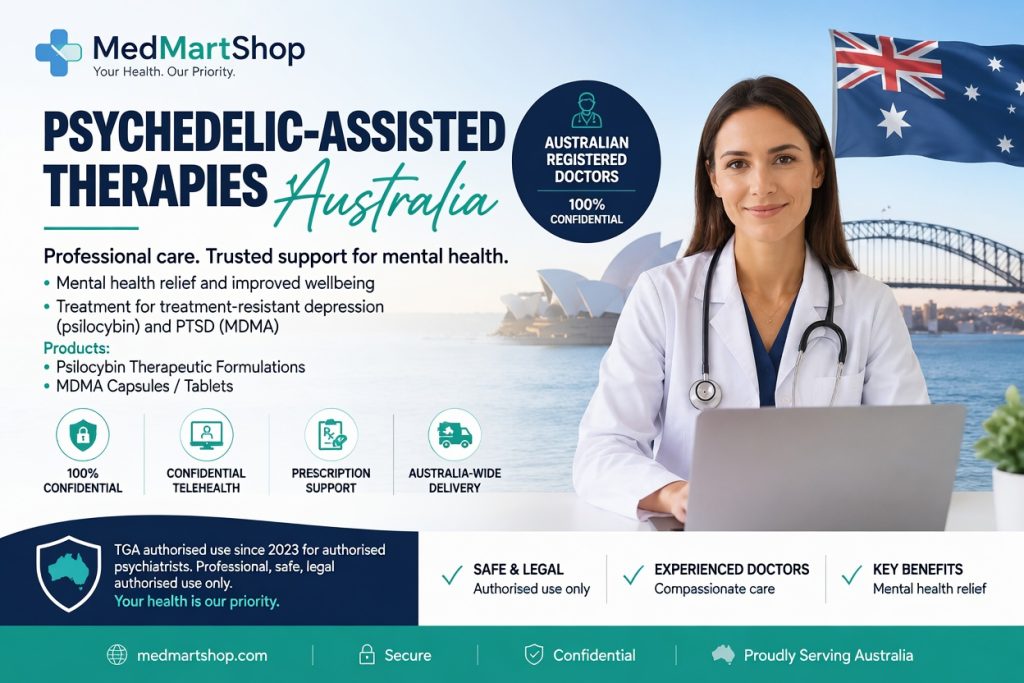
The legal status of MDMA in Australia is nuanced. For the vast majority of Australians, MDMA is illegal. Possession, supply, and trafficking of this substance are criminal offences. These offences carry severe penalties, including significant fines and lengthy prison sentences. However, a landmark change in 2023 created a strictly regulated medical exception. Since July 1, 2023, authorised psychiatrists have been able to prescribe MDMA for the treatment of post-traumatic stress disorder (PTSD). This guide provides an Australian-focused overview of the laws governing MDMA. It also covers the penalties for offences and the new medical pathway.
The General Law: MDMA Is a Prohibited Substance
For all non-medical purposes, MDMA remains a Schedule 9 (Prohibited Substance) in the Poisons Standard. This classification means it has no currently established therapeutic value. It also presents a high risk of dependency, abuse, and misuse. Consequently, it is illegal to possess, use, or supply MDMA for recreational or general use. The federal Criminal Code Act 1995 and various state and territory laws enforce this prohibition.
Penalties for MDMA Offences
Penalties for MDMA offences are severe and depend on the quantity involved. They also depend on the nature of the offence. The maximum penalties reflect the seriousness with which the law treats these crimes.
| Jurisdiction / Offence | Penalty |
|---|---|
| ACT (Possession of small quantity, e.g., 1.5g or 5 capsules) | Diversion to health education or $100 fine; maximum court penalty $160 fine |
| VIC (Possession of MDMA) | Maximum 1 year imprisonment |
| VIC (Trafficking simpliciter – 3g threshold) | Maximum 15 years imprisonment |
| VIC (Trafficking commercial quantity) | Maximum 25 years imprisonment |
| Commonwealth (Exporting MDMA) | Maximum 25 years imprisonment |
Recent court cases illustrate the severe consequences of trafficking offences. In Victoria, a man received a sentence of seven and a half years imprisonment. This was for trafficking a commercial quantity of heroin. He also faced charges for trafficking cannabis and possession of MDMA. In another case, a man received a 30-month community corrections order. He also received a $5,000 fine for trafficking cocaine and ketamine. He also possessed MDMA. A 2024 court case documented a person receiving a two-year intensive corrections order. This was for manufacturing 4.6 grams of psilocybin. The court noted that the indictable quantity for psilocybin is only 0.25 of a gram. This serves as a warning that the seriousness of an offence can escalate quickly, even with small quantities.
State and Territory Variations
Penalties for MDMA offences are not uniform across Australia. The Australian Capital Territory (ACT) has taken a more health-focused approach. Since October 2023, the ACT has reduced maximum penalties for possessing small amounts of some illicit drugs. This includes MDMA. A “small quantity” of MDMA is defined as 1.5 grams (or 5 discrete dose units, such as capsules or tablets). Individuals found with this amount may be diverted to a health education session. They may also receive a $100 fine, rather than facing a criminal conviction. However, this is not a legalisation of MDMA. Police will still confiscate the drugs. Larger quantities or trafficking offences still carry severe penalties. In other states and territories, the legal framework is stricter. Federally, a “trafficable quantity” of MDMA is defined as 0.5 grams under the Criminal Code Act 1995. In Victoria, the threshold for trafficking simpliciter (simple trafficking) of MDMA is 3 grams.
The Medical Exception: A Pathway for PTSD
In a landmark decision, the Therapeutic Goods Administration (TGA) rescheduled MDMA from Schedule 9 to Schedule 8 (Controlled Drug) . It did this for the specific treatment of PTSD, effective July 1, 2023. This made Australia the first country to formally recognise MDMA as a prescription medicine.
Who Can Prescribe?
Prescribing rights are strictly limited to psychiatrists. They must be registered with the Medical Board of Australia. They must also be Fellows of the Royal Australian and New Zealand College of Psychiatrists (RANZCP).
The Authorised Prescriber Process
To prescribe MDMA, a psychiatrist must follow several steps:
- Develop a clinical treatment protocol aligned with published studies and TGA checklists.
- Obtain approval from a registered Human Research Ethics Committee (HREC).
- Apply to and receive specific authorisation from the TGA under the Authorised Prescriber (AP) scheme.
- Unapproved Products: There are currently no MDMA products approved by the TGA. They are also not registered on the Australian Register of Therapeutic Goods (ARTG). The products used are therefore ‘unapproved’ therapeutic goods.
- Controlled Setting: Protocols that allow patients to take these medicines home are not accepted under the AP scheme. Treatment must occur in a medically supervised clinical setting.
- State/Territory Compliance: Psychiatrists must also comply with state and territory legislation.
Current Access Numbers
In the first 18 months of the program, approximately 64 patients accessed MDMA therapy through the Authorised Prescriber scheme. By September 2025, that number had grown to 87. 47 patients had received psilocybin therapy in the same period. 35 Authorised Prescriber applications were approved in the same period. Of these, 18 were for MDMA and 17 for psilocybin.
Emerging Quality Standards
To ensure the quality of MDMA products used in the medical pathway, the TGA established Therapeutic Goods (Standard for MDMA) (TGO 112) Order 2024. This standard came into effect on 6 January 2025. It specifies minimum quality requirements for MDMA hydrochloride products. It includes labelling requirements, assay limits, and purity tests. This ensures that any MDMA used in authorised therapy meets consistent quality benchmarks.
Conclusion
MDMA is not legal for general use in Australia. Possession and supply remain criminal offences with severe penalties, including imprisonment. However, a pioneering medical exception now exists. Authorised psychiatrists can prescribe MDMA for PTSD in a strictly controlled clinical setting. This is a tightly regulated pathway. It is not a general relaxation of the law. This guide is for educational and research purposes only. It does not constitute legal or medical advice. If you are considering MDMA therapy, the first step is to discuss it with a General Practitioner. They can refer you to a suitably qualified psychiatrist.