
MDMA Therapy in Australia: An Overview of New Clinical Access and Research
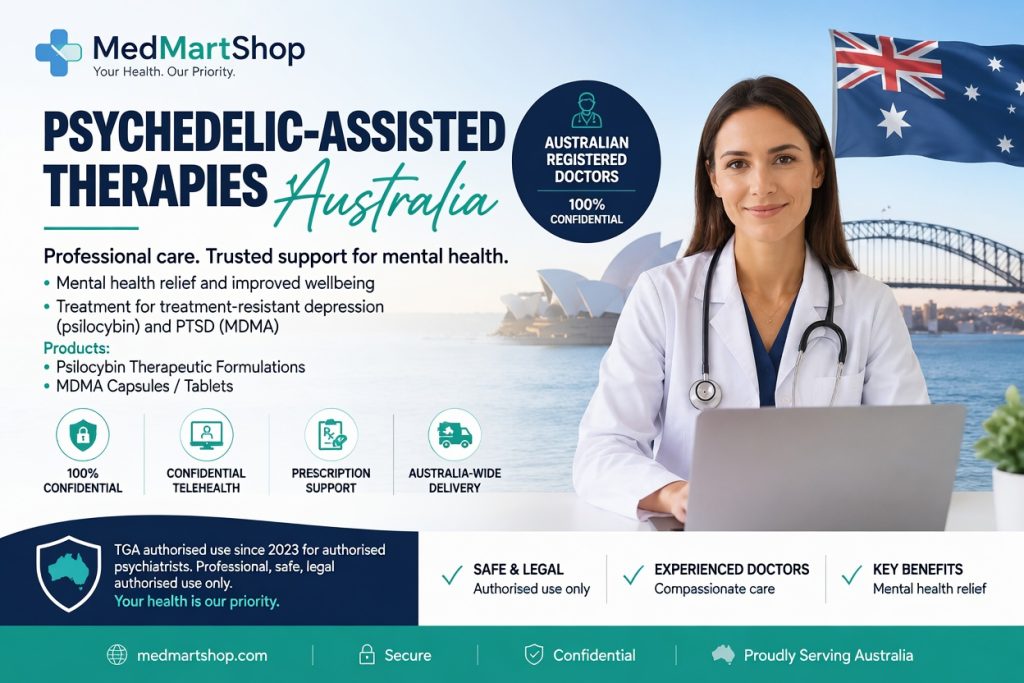
MDMA-assisted therapy has moved from clinical trials to regulated medical practice in Australia. Since July 2023, the Therapeutic Goods Administration (TGA) has allowed authorised psychiatrists to prescribe MDMA for post-traumatic stress disorder (PTSD) . This makes Australia the first country to formally regulate MDMA as a prescription medicine . Nevertheless, access remains limited and expensive . Consequently, understanding the clinical evidence, regulatory framework, and current access barriers is essential for anyone considering this emerging therapy.
Clinical Evidence: What the Research Shows
The early outcomes from Australia’s program have been promising. More than half of patients receiving MDMA with psychotherapy have reported significant relief from PTSD . Australian drug regulators have not recorded any serious adverse events among the nearly 200 patients treated under the scheme . This safety record is particularly notable given the controversy surrounding MDMA therapy in other countries.
The world’s first clinical practice guideline on MDMA-assisted psychotherapy (MDMA-AP) for PTSD was published in 2026 . Developed by Monash University and endorsed by the National Health and Medical Research Council (NHMRC), the guideline provides evidence-based recommendations for clinicians .
Key Recommendations:
- MDMA-AP is not recommended as part of routine care .
- Treatment should be limited to adults over 18 with PTSD symptoms for at least six months who have failed first-line evidence-based treatments .
- Patients must be at low risk of re-exposure to trauma during treatment .
- The guideline strongly recommends against use in patients who are pregnant or breastfeeding, have cardiovascular disease, psychotic disorder, suicide-related distress, or are taking medications that may interact with MDMA .
MDMA is not a classic psychedelic like psilocybin. It is an empathogen that produces feelings of social connection and emotional openness . The drug reduces activity in the amygdala—the brain’s “fear center”—allowing patients to confront past traumas without being re-traumatised . As one patient described, MDMA allowed him to “go back into past memories, including the traumatic memories, but they weren’t traumatic to deal with” .
The Regulatory Framework: How Access Works
The only legal way to access MDMA therapy is through the TGA’s Authorised Prescriber (AP) scheme . Only psychiatrists registered with the Medical Board of Australia who are Fellows of the Royal Australian and New Zealand College of Psychiatrists (RANZCP) can prescribe MDMA .
To become an Authorised Prescriber, a psychiatrist must:
- Develop a clinical treatment protocol
- Obtain approval from a registered Human Research Ethics Committee (HREC)
- Apply to and receive authorisation from the TGA
There is no application fee . However, psychiatrists must submit six-monthly reports on the number of patients treated .
Unapproved Products
Products containing MDMA are not included in the Australian Register of Therapeutic Goods (ARTG) . They are ‘unapproved’ therapeutic goods that have not been evaluated by the TGA for safety, quality, and efficacy in the same way as registered medicines . Protocols that allow patients to take these medicines home are not accepted under the AP scheme .
Recent TGA Rule Changes (2026)
The TGA has refined the regulatory framework to address procedural challenges . The four key recommendations aim to balance appropriate access with strong safeguards .
1. Psychiatrist Competency
Psychiatrists can demonstrate competency through clinical trial experience or supervised practice under an experienced AP .
2. Therapy Team Composition
Treatment must be administered by a “therapy dyad” consisting of the AP psychiatrist and at least one other registered healthcare practitioner . This can include endorsed clinical psychologists, physicians with general registration, mental health nurses, or occupational therapists . This change aims to address workforce shortages, particularly in rural areas .
3. Prescriber Oversight
The AP psychiatrist is responsible for patient screening, informed consent, and must be physically present during drug administration . The psychiatrist is not required to remain on site for the full dosing day, providing flexibility to reduce costs .
4. Treatment Site Standards
Treatments can occur in any medically supervised environment meeting defined safety standards . Sites must be within 15 minutes of an accredited healthcare facility with an emergency department .
Safety Debate and Concerns
The changes have sparked debate among clinicians . Clinical psychologist Shai Hipperson warns the relaxed rules could endanger vulnerable trauma patients, citing the lack of standardised training benchmarks for facilitators . The Australian Association of Psychologists (AAPi) has strongly criticised the changes, stating the new framework excludes approximately 70% of psychologists from providing psychedelic-assisted therapy .
Cost and Access Barriers
The treatment is expensive. With an average cost of $20,000 to $30,000 for up to three dosing sessions and 40 hours of counselling, MDMA therapy is largely out of reach for many Australians . Fewer than 50 psychiatrists are authorised to prescribe MDMA, and most practice in coastal cities . The licensing process can take up to six months . This creates a postcode lottery for care.
Coverage and Reimbursement
Coverage is expanding. Public coverage includes the Department of Veterans’ Affairs (DVA) for eligible veterans, the National Disability Insurance Scheme (NDIS), and some WorkCover schemes . Private coverage includes Medibank, Australia’s largest private health insurer . However, DVA will not reimburse self-funded treatment .
Conclusion
MDMA-assisted therapy is legally available in Australia for PTSD through a strict, regulated medical pathway. The early clinical evidence is promising, with significant symptom reductions and a strong safety record. However, access is severely limited by high costs, a small workforce, and inconsistent state regulations. For patients with treatment-resistant PTSD who have exhausted other options, this therapy represents a new frontier. However, the path to access remains challenging. This guide is for educational and research purposes only and does not constitute legal or medical advice. If you are considering MDMA therapy, the first step is to discuss it with a General Practitioner, who can refer you to a suitably qualified psychiatrist.