
Medicinal MDMA in Australia: A Guide to Its Use, Access, and Challenges
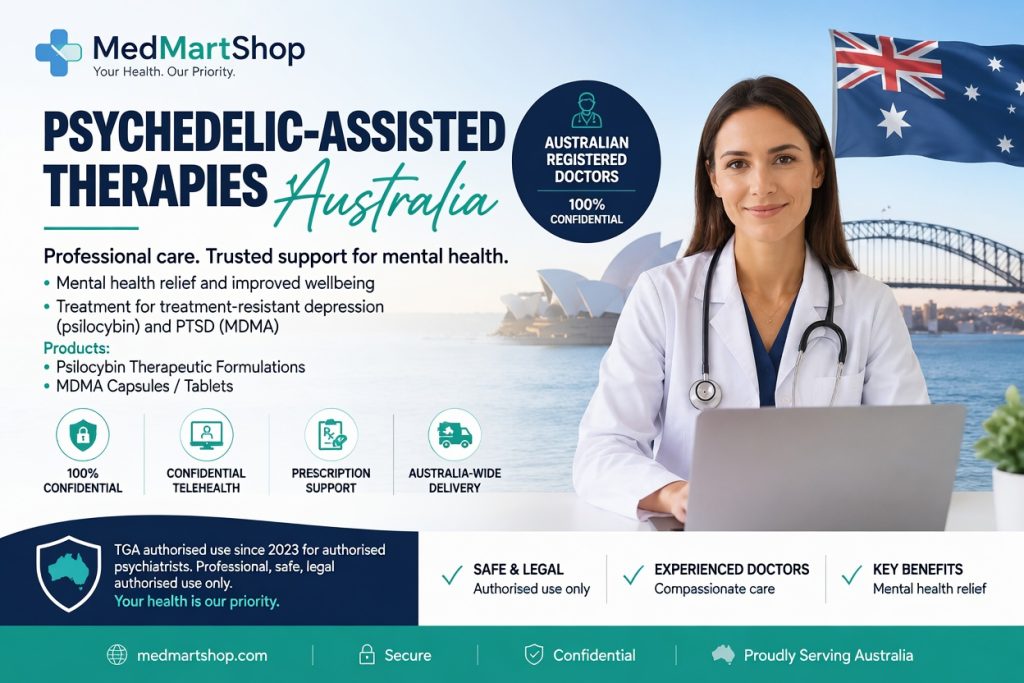
Australia has emerged as a global pioneer in medicinal MDMA. Since July 1, 2023, authorised psychiatrists have been able to prescribe MDMA for the treatment of post-traumatic stress disorder (PTSD) outside of clinical trials . This made Australia the first country to establish a national, regulated clinical model for these therapies . Nevertheless, access remains limited and expensive . Consequently, understanding the legal framework, the therapeutic process, and the current barriers is essential for anyone considering this treatment.
The Legal Framework: From Prohibition to Controlled Medicine
The Therapeutic Goods Administration (TGA) rescheduled MDMA from a Schedule 9 (Prohibited Substance) to a Schedule 8 (Controlled Drug) medicine for the specific treatment of PTSD . For this specific use, MDMA now has a legitimate therapeutic purpose. However, this is not a general relaxation of the law. For all other purposes, MDMA remains a prohibited substance.
Products containing MDMA are not included in the Australian Register of Therapeutic Goods (ARTG) . They are referred to as ‘unapproved’ therapeutic goods. Consequently, they have not been evaluated by the TGA for safety, quality or efficacy in the same way as registered medicines . The TGA’s decision to allow psychedelic-assisted therapy was controversial, with its own expert panel concluding the available evidence to support its use was of low quality . One panel member later criticised the decision as “too fast and too soon” . In June 2024, a US Food and Drug Administration (FDA) advisory committee voted against approving MDMA for PTSD, partly due to concerns about data integrity and therapist misconduct in US clinical trials .
How the Medical Pathway Works
Only psychiatrists registered with the Medical Board of Australia who are Fellows of the Royal Australian and New Zealand College of Psychiatrists (RANZCP) can prescribe MDMA .
The Authorised Prescriber Process
To prescribe MDMA, a psychiatrist must:
- Develop a clinical treatment protocol aligned with published studies and TGA checklists.
- Obtain approval from a registered Human Research Ethics Committee (HREC).
- Apply to the TGA to become an Authorised Prescriber for each product .
The TGA has recently refined the regulatory framework to address procedural challenges. Psychiatrists must now demonstrate competency in psychedelic-assisted therapy through either clinical trial experience or supervised practice under an experienced Authorised Prescriber .
Treatment must be delivered as Psychedelic-Assisted Psychotherapy (PAP) by a “therapy dyad.” The dyad must include the Authorised Prescriber psychiatrist and at least one other registered healthcare practitioner . The AP psychiatrist is responsible for patient screening and informed consent and must be physically present during the administration of the medicine . Treatment must occur in an appropriate medically supervised environment, located near (within 15 minutes of) an accredited healthcare facility with an emergency department . Protocols that allow patients to take these medicines home are not accepted under the AP scheme .
Clinical Evidence and Safety
Positive Outcomes and Safety Record
The early results have been encouraging. More than half of patients who received MDMA with psychotherapy reported significant relief from PTSD . Australian drug regulators have not recorded any serious adverse events among the nearly 200 patients who have been through the program since its inception .
Ongoing Debate and Misconduct Concerns
Despite these positive outcomes, the field remains controversial. The TGA’s decision was criticised by some experts as “too fast and too soon” . Concerns about professional misconduct, especially sexual boundary violations, have been raised internationally . Evidence of therapist misconduct in US clinical trials was a key factor in the FDA’s decision to reject MDMA therapy . While there have been no public reports of such misconduct in Australia, these international reports raise serious red flags .
Major Barriers to Access
The most significant barrier is cost. A full course of MDMA-assisted therapy at a private clinic can cost approximately $20,000 for up to three dosing sessions and 40 hours of counselling . This high cost reflects the labour-intensive nature of the treatment, which requires multiple clinicians and extended sessions . There is currently no Medicare item number that adequately captures this model of care .
Limited Workforce and Geographic Disparities
Fewer than 50 psychiatrists are authorised to prescribe MDMA in Australia, and most practice in a handful of coastal cities . The licensing process, which includes ethics panel approval, can take up to six months .
State Variations: A “Postcode Lottery”
Differences have emerged in how different states and territories apply psychedelic-assisted therapy regulations . In New South Wales, practitioners need separate approval for every patient, and treatment must occur in a licensed private mental health facility, yet none is licensed for the required day-stay procedure . This has forced NSW patients to travel to Victoria for treatment . This inconsistency creates a “postcode lottery” for care .
Emerging Coverage and Supply
Some coverage is emerging. Medibank became the first private health insurer to fund the psychotherapy component of the treatment . The Department of Veterans’ Affairs (DVA) is also funding the therapy for eligible veterans with severe PTSD . However, DVA will not reimburse self-funded treatment .
On the supply side, Cortexa, a joint venture between PharmAla Biotech and Vitura Health, has successfully committed the majority of what it describes as the world’s largest GMP batch of MDMA capsules, with sales exceeding AUD$1.0 million . The company has initiated production of a second GMP batch featuring a new 20mg dosage form, expected to be available in Q2 2026 .
Conclusion
Medicinal MDMA is legally available in Australia for the treatment of PTSD through a strict, regulated medical pathway. The early clinical evidence is promising, with significant symptom reductions and a strong safety record. However, access is severely limited by high costs, a small workforce, and inconsistent state regulations. For patients with treatment-resistant PTSD who have exhausted other options, this therapy represents a new frontier. However, the path to access remains challenging. This guide is for educational and research purposes only and does not constitute legal or medical advice.