
MDMA Australia News 2026: New Rules, Safety Debates, and Growing Patient Access
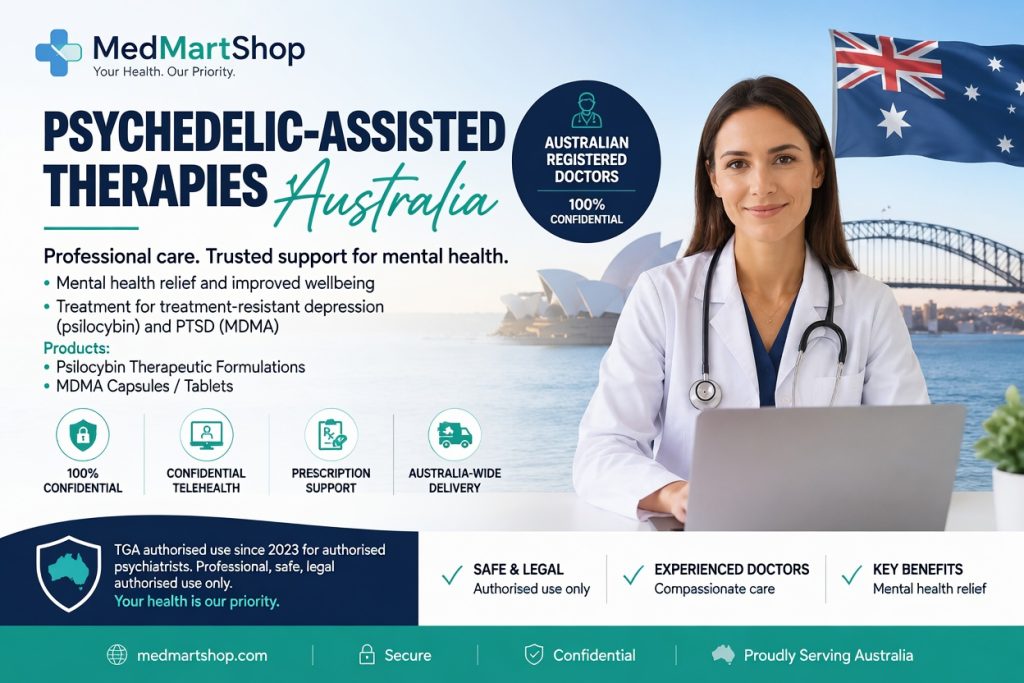
Australia remains a global leader in psychedelic medicine. Since 2023, authorised psychiatrists have been able to prescribe MDMA for post-traumatic stress disorder (PTSD) outside clinical trials . Recent news shows the regulatory framework is evolving rapidly. The Therapeutic Goods Administration (TGA) has released major updates to the Authorised Prescriber scheme. These changes aim to expand access and reduce costs. Nevertheless, they have sparked a sharp debate about patient safety . This guide covers the latest MDMA news in Australia, including rule changes, costs, and clinical outcomes.
Latest TGA Rule Changes: What Has Changed?
The TGA has issued four key recommendations to refine the MDMA and psilocybin therapy framework . These changes address workforce challenges and treatment access barriers.
1. Psychiatrist Competency Pathways
Psychiatrists must now demonstrate competency in psychedelic-assisted therapy. They can do this through clinical trial experience or supervised practice under an experienced Authorised Prescriber . This dual pathway recognises that clinical trial experience is rare.
2. Therapy Team Composition
The previous rules required a psychiatrist and clinical psychologist for the entire session. The new rules are more flexible. A “therapy dyad” must now include the psychiatrist and at least one other registered practitioner. This can be a clinical psychologist, mental health nurse, or occupational therapist . The Australian Association of Psychologists (AAPi) has strongly criticised this change, stating it excludes approximately 70% of psychologists from providing therapy .
3. Psychiatrist On-Site Presence
The psychiatrist must remain present during the drug’s administration. However, they are no longer required to stay for the full dosing day . This change preserves flexibility and could reduce costs. Critics, including clinical psychologist Shai Hipperson, warn it could endanger vulnerable patients without standardised facilitator training .
4. Treatment Sites
Treatments can now occur in any medically supervised environment meeting defined safety standards. Sites must provide emergency resuscitation capability and be within 15 minutes of an accredited emergency department . This moves away from traditional hospital settings, aiming to improve patient comfort and access in rural areas .
Clinical Evidence and Patient Outcomes
Early real-world data from Australia shows the therapy works for many patients. More than half of patients who received MDMA with psychotherapy reported significant PTSD relief . Duncan Livingston, who suffered from PTSD for 40 years, described the treatment as letting him be “reborn again” .
Strong Safety Record
Australian drug regulators have not recorded any serious adverse events among the nearly 200 patients treated under the scheme since it started . According to TGA data, no serious adverse events have been reported since December 2025 . This clean safety profile, accumulated in a real-world setting, is a key argument for program expansion .
Mechanisms of Action
MDMA numbs the amygdala, the brain region responsible for emotional reaction . This allows patients to confront past traumas without shutting down emotionally . Patients can observe their experiences as an “observer” rather than being re-traumatised .
Costs and Access Barriers
Cost remains the most significant barrier. MDMA-assisted therapy at private clinics costs approximately $20,000 to $30,000 for up to three dosing sessions and extensive counselling . WAG Zoe Marshall described the treatment as “eye-wateringly expensive” . Fewer than 50 psychiatrists are authorised to prescribe MDMA, and most practice in coastal cities . The licensing process can take up to six months . This creates a postcode lottery for care.
Emerging Coverage
Coverage is expanding. Public coverage now includes the Department of Veterans’ Affairs (DVA), the National Disability Insurance Scheme (NDIS), and WorkCover schemes . Private coverage includes Medibank, Australia’s largest health insurer . The DVA has announced a $740 million rehabilitation plan for veterans, including support for psychedelic-assisted therapy .
Manufacturing and Supply
The supply chain is also maturing. PharmAla Biotech has manufactured Australian-made MDMA capsules, delivered to the Orygen Institute for a Phase 3 trial on social anxiety in autistic youth . Optimi Health has confirmed its MDMA capsules are being used in authorised clinics across Australia .
Conclusion
Australia’s MDMA therapy program is rapidly evolving. Recent TGA rule changes aim to expand access and reduce costs. However, safety concerns remain, particularly regarding therapist training and oversight. The therapy shows impressive patient outcomes and a strong safety record, but the high cost still limits access for many Australians. For those eligible, MDMA-assisted therapy represents a new frontier in PTSD treatment. This guide is for educational and research purposes only and does not constitute legal or medical advice.