
Legal Psychedelics Australia: A Comprehensive Guide to MDMA and Psilocybin Access
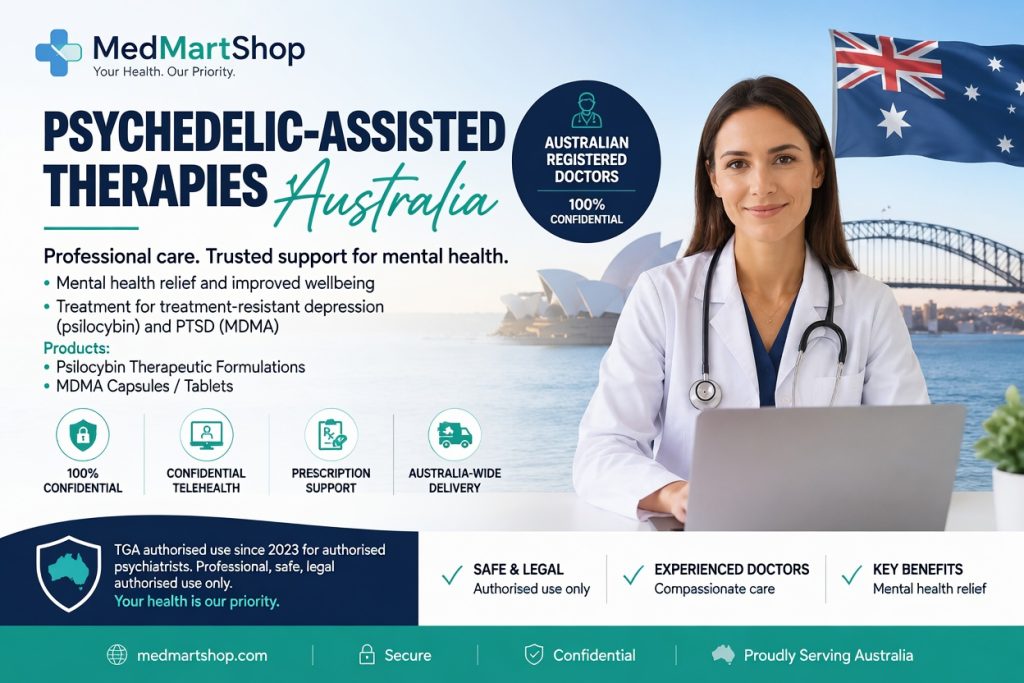
Australia has become a global pioneer in psychedelic reform. Since July 1, 2023, the Therapeutic Goods Administration (TGA) has reclassified MDMA and psilocybin as Schedule 8 medicines for specific mental health conditions. This historic decision positions Australia as the first country to legalise psychedelic-assisted therapy within its national healthcare framework. Nevertheless, access remains tightly controlled. Consequently, understanding exactly what is legal, who can prescribe it, and the strict conditions involved is essential for anyone exploring this treatment option.
The Historic Reclassification: What Changed in 2023?
The TGA made a landmark decision to reschedule two psychedelic substances. MDMA and psilocybin moved from Schedule 9 (Prohibited Substances) to Schedule 8 (Controlled Drugs) for specific therapeutic uses. This change allows authorised psychiatrists to prescribe these substances under strict conditions. Prior to this change, these substances were illegal for any use. Now, they occupy a regulated medical pathway similar to other controlled medicines.
The specific indications are clearly defined. MDMA is legal for treating Post-Traumatic Stress Disorder (PTSD). Psilocybin, the active compound in “magic mushrooms,” is legal for Treatment-Resistant Depression (TRD). For all other indications, these substances remain Schedule 9 prohibited drugs. Therefore, the legal access is not a general approval but a narrow, condition-specific exception.
How to Access Legal Psychedelics in Australia
Accessing legal psychedelics is not straightforward. The pathway is rigorous and multi-layered, designed to ensure patient safety. Consequently, patients must navigate several steps before receiving treatment.
Step 1: The Authorised Prescriber (AP) Psychiatrist
Only psychiatrists can prescribe MDMA and psilocybin. The prescribing psychiatrist must:
- Hold specialist registration as a psychiatrist with the Australian Health Practitioner Regulation Agency (AHPRA).
- Be a Fellow of the Royal Australian and New Zealand College of Psychiatrists (RANZCP).
- Apply to the TGA to become an Authorised Prescriber (AP) for each substance.
To obtain AP status, psychiatrists must undergo a rigorous process. They must develop a clinical treatment protocol and get it approved by a registered Human Research Ethics Committee (HREC). Consequently, the initial barrier to becoming a prescriber is significant. This limits the number of psychiatrists currently offering these treatments.
Step 2: The Therapy Dyad
Treatment is not a simple prescription. It must be delivered as Psychedelic-Assisted Psychotherapy (PAP) by a team of at least two therapists. This is known as the therapy “dyad.”
The TGA has clarified the composition of the dyad. It must include the AP psychiatrist and at least one other healthcare practitioner registered with a National Board. This can include an endorsed clinical psychologist, a general medical practitioner, a mental health nurse, or an occupational therapist.
This requirement has sparked considerable debate. The Australian Association of Psychologists (AAPi) has expressed deep disappointment that psychologists without clinical endorsement are excluded from lead therapist roles. They argue that this creates an arbitrary two-tier system. Nevertheless, the TGA maintains that oversight by a National Board-registered practitioner is essential for patient safety.
Step 3: The Treatment Setting
The administration of psychedelics must occur in a medically supervised and controlled environment. The TGA has specified that the site must be equipped to handle emergencies. Additionally, it must be located within 15 minutes of an accredited healthcare facility with an emergency department. This requirement aims to ensure rapid response to any adverse events.
Step 4: Patient Eligibility and Consent
The AP psychiatrist is responsible for patient screening and obtaining informed consent. Patients must typically have treatment-resistant conditions that have not responded to other therapies. Protocols that allow patients to take these medicines home are not accepted. Furthermore, patients must have been prescribed at least two different antidepressants and undergone another type of therapy without progress.
Recent Developments and Ongoing Debate
The regulations continue to evolve. In 2025, the TGA released updated guidance following a targeted consultation with over 80 stakeholders. The goal was to balance facilitating access with maintaining strong safeguards. Consequently, several key changes emerged.
Key Changes in the Updated Guidance
Psychiatrist Experience: Psychiatrists can now demonstrate competency through supervision by an experienced AP. They no longer require clinical trial experience alone. This change should expand the pool of qualified prescribers.
Therapist Composition: The second therapist role has broadened to include various registered health practitioners. This improves access in rural and regional areas where clinical psychologists may be scarce.
On-Site Presence: The AP psychiatrist no longer needs to remain on-site for the entire dosing day. However, they must be present during administration and remain responsible for the patient. The TGA made this decision to preserve flexibility and support service accessibility.
Safety Concerns and Criticisms
These changes have sparked safety concerns among some clinicians. Clinical psychologist Shai Hipperson has warned that the relaxed rules could endanger vulnerable trauma patients. She cites the lack of standardised training benchmarks for facilitators as a major concern.
Proponents argue that the changes are necessary to expand access. They believe these treatments could be life-changing for patients who have exhausted conventional options. Nevertheless, the debate highlights the tension between access and safety in this emerging field.
What About Veterans?
The Department of Veterans’ Affairs (DVA) has formally announced that it will fund Psychedelic Assisted Psychotherapy (PAP) from November 2025. This applies to eligible veterans diagnosed with PTSD or TRD. This decision follows the TGA’s reclassification and represents a significant step in trauma-informed care for veterans. Consequently, veterans may have an additional pathway to access these treatments.
A Note on Safety and Legality
MDMA and psilocybin remain unapproved therapeutic goods. They are not included in the Australian Register of Therapeutic Goods (ARTG). Consequently, the TGA has not evaluated them for safety, quality, or efficacy in the same way as registered medicines. This underscores why strict controls and specialist oversight are required.
Furthermore, the legal pathway is exclusively for therapeutic use. For any other purpose, MDMA and psilocybin remain prohibited substances. Possession of these substances without appropriate regulatory authority is illegal. As one clinical psychologist noted, the treatments are “not suitable for most Australians” and are reserved for specific, treatment-resistant conditions.
Conclusion
Australia’s legalisation of MDMA and psilocybin for therapeutic use is a pioneering step in mental health treatment. It provides a regulated pathway for patients with severe, treatment-resistant PTSD and depression to access these emerging therapies. However, access is not simple. It requires a rigorous process involving authorised psychiatrists, a therapy dyad, a controlled clinical setting, and strict patient eligibility.
The regulatory framework continues to evolve and spark debate. Nevertheless, the core principle remains: these treatments are for specific conditions, under specialist care, and within a tightly controlled environment. For eligible patients, discussing this option with a psychiatrist who is or can become an Authorised Prescriber is the only legal path forward.