
Is Psilocybin Legal in Australia, and How Does Its Classification Differ from Other Countries?
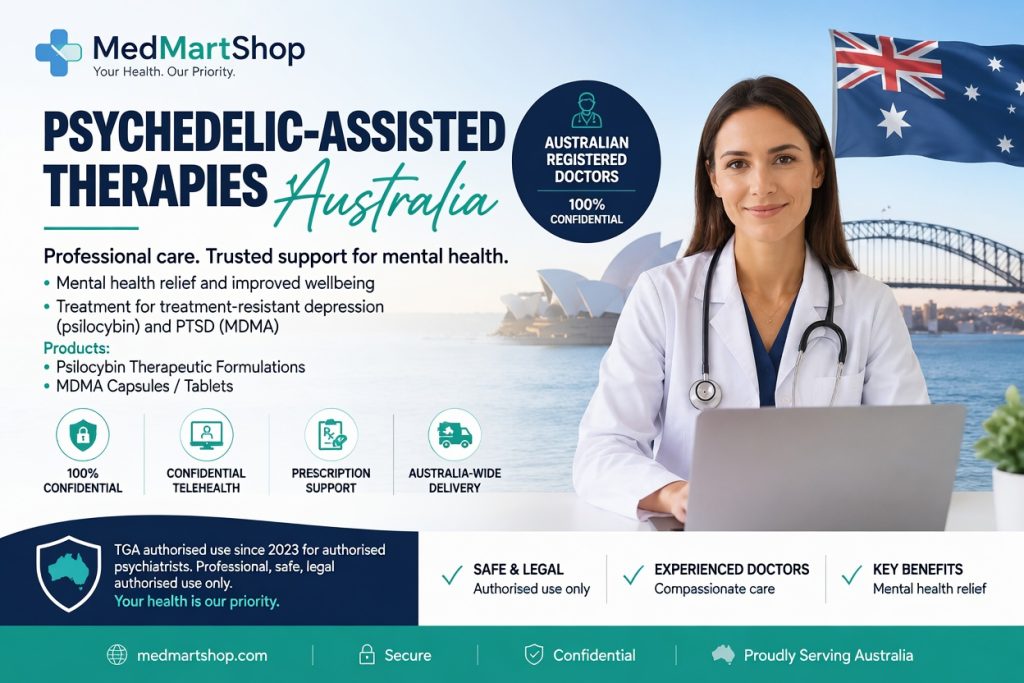
Australia has emerged as a global pioneer in psychedelic reform. Since July 1, 2023, the Therapeutic Goods Administration (TGA) has reclassified psilocybin from a Schedule 9 (Prohibited Substance) to a Schedule 8 (Controlled Drug) medicine, but only for the specific treatment of treatment-resistant depression . This landmark decision makes Australia the first national regulator to recognise psilocybin as a legitimate medicine within a formal healthcare framework . Nevertheless, this legal access is strictly controlled and differs significantly from the approaches taken by other countries. Consequently, understanding Australia’s unique position requires a comparative look at global regulatory frameworks.
Australia: The First National Medical Framework
Australia’s model is unique because it operates at a federal level. The TGA decision applies nationwide, bypassing state-level restrictions, though authorised psychiatrists must still comply with state and territory regulations .
Key Features of the Australian Model:
- Strict Eligibility: Only psychiatrists registered with the Medical Board of Australia and who are Fellows of the Royal Australian and New Zealand College of Psychiatrists (RANZCP) can prescribe psilocybin .
- Authorised Prescriber Scheme: Psychiatrists must apply for specific TGA approval, have their treatment protocol reviewed by a Human Research Ethics Committee (HREC), and receive authorisation under the Authorised Prescriber (AP) scheme .
- Controlled Setting: Treatment must occur in a medically supervised environment. The TGA explicitly states that “protocols that allow patients to take these medicines home are not accepted under the AP scheme” .
- Specific Indication: Psilocybin is only legal for treatment-resistant depression (TRD). For all other indications, it remains a Schedule 9 prohibited substance .
Current Status: As of mid-2026, approximately 40 psychiatrists hold approvals, and about 74 patients have received psilocybin therapy outside of clinical trials. There are currently no products containing psilocybin registered on the Australian Register of Therapeutic Goods (ARTG), meaning all legal psilocybin is an unapproved therapeutic good .
Other Countries with Formal Medical Frameworks
While Australia is the first national regulator to establish a comprehensive framework, other jurisdictions have implemented or are developing similar models.
United States (State-Level):
Australia’s framework is often compared to state-level initiatives in Oregon and Colorado, which legalised psilocybin therapy through voter initiatives . However, there is a key difference: Australia’s reform is a national decision, whereas in the US, psilocybin remains a Schedule I substance federally, creating a fragmented legal landscape . Other states like Utah and New Mexico have since established their own limited access programs .
Canada (Provincial and Federal):
Canada presents a dual system. Alberta has established a provincial framework allowing psychiatrists to prescribe psilocybin . Federally, Health Canada’s Special Access Program (SAP) permits restricted medical access in exceptional cases, but this is an emergency access mechanism, not a routine prescribing pathway .
Czech Republic:
The Czech Republic recently enacted legislation, effective January 1, 2026, allowing therapeutic psilocybin to be prescribed for certain mental disorders within a structured framework, making it one of the few European nations with a formal medical model .
Countries with Limited Access or Compassionate Use
Switzerland and Germany:
Both countries permit access through case-by-case exemptions or compassionate use programs. Switzerland has had an exemption-based system since 2014, while Germany authorised a Compassionate Use Program (CUP) for psilocybin in 2025 for patients with treatment-resistant depression .
Denmark:
Denmark established a regulatory pathway for medical access in 2022, but it operates through a licensing system that limits widespread therapeutic application .
New Zealand:
Psilocybin remains a Class A controlled drug in New Zealand. However, in a significant development, the first individual approval for medical psilocybin use was granted to a psychiatrist in June 2025 under a special access pathway. This allows use outside of clinical trials but under strict regulatory oversight .
Countries with No Formal Medical Access
United Kingdom and Ireland:
These countries have no formal approvals for psilocybin therapy. Both nations have active research institutions and clinical trials, but access for patients is largely restricted to research settings .
Japan:
Japan has a restrictive regulatory environment. While research is increasing (e.g., Otsuka–Keio collaborations), psilocybin remains a prohibited substance with no legal medical pathway .
India:
India maintains stringent prohibitions on psilocybin with severe penalties for possession and use, despite emerging research indicating potential medical benefits .
Conclusion: Australia as a Pioneer, But Not Alone
Australia’s decision to reclassify psilocybin as a medicine is a pioneering step that positions the country as a leader in psychedelic therapy. However, the landscape is diverse. Australia’s model is a structured, federal framework for routine psychiatric prescribing. This contrasts with the state-level patchwork in the US, the emergency-access model in Canada, and the compassionate-use frameworks in Europe.
For Australians, the law is clear: psilocybin is legal only for treatment-resistant depression, only through authorised psychiatrists, and only in a controlled medical setting. It is not available for general use, and the penalties for possession or supply outside this framework remain severe. This guide is for educational and research purposes only and does not constitute legal advice.