
Where to Buy DMT in Australia: Legal Realities, Risks, and Legitimate Alternatives
The search for where to buy DMT in Australia often stems from a genuine desire for deep healing or spiritual exploration. However, the answer must begin with legal reality. DMT is a Schedule 9 prohibited substance in Australia, making it a criminal offence in all states and territories. This means no legal purchase channel exists within the country. Consequently, any online store, Telegram group, or street seller claiming to sell DMT in Australia is either a scam or engaging in illegal activity. This guide provides a systematic overview of the Australian legal framework, the risks of online purchases, the reality of plant sources, and the only legitimate alternative pathways currently available.
The Australian Legal Framework: Schedule 9 Prohibition
First and foremost, you must understand a core fact. Authorities classify DMT (N,N-dimethyltryptamine) as a Schedule 9 prohibited substance in Australia. This classification applies across all states and territories. Therefore, possession, use, manufacture, supply, importation, or exportation of DMT carries severe criminal penalties.
Specific regulations vary by state, but enforcement remains consistent. In New South Wales, the maximum penalty for possession of DMT is 2 years imprisonment and/or a $2,200 fine. Supplying 0.8 grams (small quantity) carries a $5,500 fine and/or 2 years imprisonment. get 0.5 kg (commercial quantity) carries a $385,000 fine and/or 20 years imprisonment. Supplying 2 kg (large commercial quantity) carries a maximum penalty of life imprisonment.
In Victoria, DMT is controlled under the Drugs, Poisons and Controlled Substances Act 1981. Queensland enforces its prohibitions through the Drugs Misuse Act 1986. Tasmania, South Australia, the Northern Territory, and Western Australia all have similar legislation criminalising DMT.
Notably, the Australian Capital Territory (ACT) has decriminalised small amounts of some illicit drugs. However, this policy has not extended to DMT. DMT remains a prohibited substance in the ACT.
The Risks of Online Purchases: Scams and Enforcement
The internet is flooded with channels claiming to sell DMT in Australia. Telegram accounts such as @Darren_luis openly advertise “DMT carts” for sale in Darwin. These channels are completely unregulated. Product composition cannot be verified, and law enforcement actively monitors them.
More dangerously, some websites market DMT-containing plant extracts under the guise of “wholesale suppliers.” For example, medikonda.com.au claims to be “Australia’s largest organic Psychotria Viridis extract powder B2B wholesale supplier,” noting that the product “contains naturally occurring dimethyltryptamine (DMT).” These sites typically operate under the banner of “ethnobotanical research.” In reality, they supply raw materials for illegal extraction. Purchasing such products also carries legal risk, because possessing DMT-containing plant material can constitute an offence in certain circumstances.
The Reality of Plant Sources: Australian Acacia
Australia’s native Acacia genus (commonly known as wattle) does contain DMT. Western Australia is the diversity centre for Acacia, with 894 natural species. The first clandestine DMT extraction lab in WA was discovered in 2008. Since then, detection rates have continued to rise, and these labs are now the most common type of clandestine laboratory in WA.
DMT is typically extracted from the bark of local Acacia trees. The process is relatively simple and often uses rudimentary equipment. A 2026 WA pilot study screened phyllodes from 148 Acacia species and found some contained DMT and other tryptamines.
However, extraction faces practical obstacles. DMT content in Acacia is only 0.5% to 1.5%, meaning large amounts of plant material are required. Furthermore, ringbarking trees kills them. From a conservation perspective, destroying native plants is illegal even before any drug extraction occurs. “From a conservation angle, ringbarking trees kills them. Even before you get to extracting an A-class drug, damaging native flora is an offence in itself,” notes Dr Kelly Shepherd from the WA Herbarium.
Daniel Perkins, a researcher at the University of Melbourne, notes that his team has moved to synthetic DMT. “We want this to be medicine that’s used by millions of people around the world. That would be very hard to do with a botanical product.”
The Rise of Vape Carts and Health Risks
A new trend has emerged in Australia: loading DMT into vape carts. This method is particularly common at psychedelic music festivals and underground parties. Users believe vape devices are easy to use and harder for police to identify.
However, health risks are extreme. A 14-year-old South Australian boy was hospitalised after inhaling a vape laced with DMT and THC. He suffered seizures, heart irregularities, and was unresponsive for 15 hours. His mother, a volunteer ambulance officer, described the terrifying experience: “He was hallucinating, he remembers seeing colours and remembers people touching him — but he wasn’t able to do anything about it. He said it felt like his head was disconnected from his body.”
Robert Taylor from the Alcohol and Drug Foundation warns: “DMT is quite a potent psychedelic, and it can be quite overwhelming and distressing if people aren’t prepared for it. If it’s a vape that someone’s given you, you don’t know what the concentration is. You don’t know how much you’ll get in one puff.”
More seriously, reports describe people being dosed without their knowledge after using someone else’s vape. Taylor confirms this constitutes unsolicited drug administration: “You’re experiencing effects that you weren’t intending on experiencing. It’s particularly bad if someone’s done that with the intention to do that to you.”
Legitimate Alternative Pathways: Clinical Trials and Education
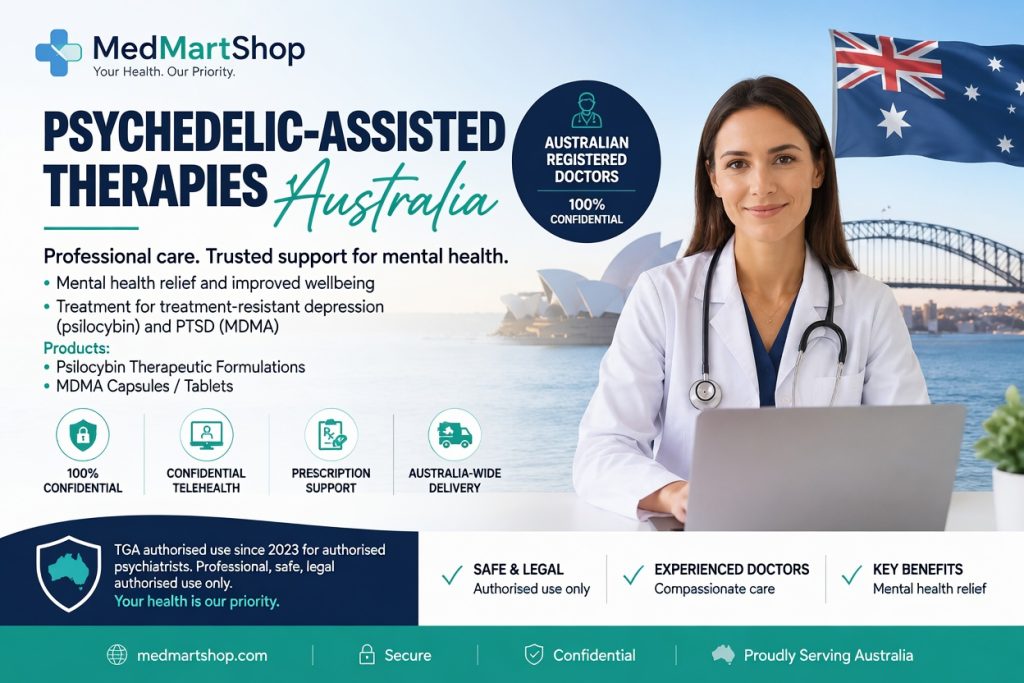
In Australia, the only legal pathway to access DMT is participation in approved clinical trials. Australia’s legal psychedelic therapy framework currently covers psilocybin (for treatment-resistant depression) and MDMA (for PTSD). DMT is not included in this therapeutic framework.
Australian clinical research is advancing. Swinburne University of Technology received $1.97 million from the Medical Research Future Fund. This grant funds a DMT-assisted psychotherapy trial for adults with alcohol use disorder and/or major depressive disorder. Dr Daniel Perkins at the University of Melbourne is leading a randomised controlled trial investigating a DMT-based drug for major depression and alcohol use disorder. Neurala Biosciences is developing second-generation DMT-harmala alkaloid neuromedicines.
Additionally, educational pathways offer Australians a legal way to learn about DMT. Ethnobotanist Dr Liam Engel conducts psychoactive plant sessions in Emu Plains, NSW. These sessions cover DMT and other natural psychedelics. These educational programmes operate within the legal framework. They focus on knowledge and harm reduction rather than consumption.
Conclusion
The question of where to buy DMT in Australia has a clear and unambiguous answer. DMT is a Schedule 9 prohibited substance, and no legal purchase pathway exists within the country. Online stores are scams or illegal operations. Telegram sellers are engaging in illegal activity. Extracting from Acacia carries both legal and environmental risks.
Real enforcement cases demonstrate the severe consequences. In 2021, a 20-year-old man’s package from Germany was intercepted in Brisbane containing 433 grams of DMT. He faced a maximum penalty of 25 years imprisonment. In 2026, 39-year-old Andreas Panas faced court again after importing DMT following his release from prison for a meth lab explosion. The intercepted package contained 19.2 grams of pure DMT.
For those seeking DMT’s therapeutic potential, clinical trials are the only legitimate pathway. For those seeking legal education, workshops by experts like Dr Liam Engel provide a safe knowledge pathway. The research outlook for DMT is promising. However, the Australian legal reality cannot be ignored. The wisest course involves remaining informed about evolving clinical research, supporting evidence-based policy reform, and prioritising safety and legality above all else.