
Where Is 5-MeO-DMT Legal in Australia? A Comprehensive Guide
The question of where 5-MeO-DMT is legal in Australia has a straightforward answer. It is not legal anywhere in the country for general use. This potent compound, often called “the God molecule,” remains a Schedule 9 prohibited substance under the Australian Poisons Standard. Consequently, its possession, supply, and use carry significant legal penalties across every state and territory. However, the landscape of psychedelic regulation in Australia is evolving, and understanding the nuances of this legal status is essential. This guide provides a detailed, Australia-oriented overview of the legal realities surrounding 5-MeO-DMT.
The National Legal Framework: Schedule 9 Prohibition
First and foremost, you must understand the foundational legal classification. 5-MeO-DMT is a Schedule 9 prohibited substance under the Poisons Standard in Australia . This classification places it in the highest category of restriction, reserved for substances that have no accepted medical use and a high potential for abuse. As a structural analog of N,N-dimethyltryptamine (DMT), it falls under the same stringent controls .
The implications of this classification are severe. Unauthorized possession, supply, manufacture, or importation of 5-MeO-DMT is illegal across all Australian jurisdictions. Furthermore, the Customs (Prohibited Imports) Regulations explicitly list it as a prohibited import. Consequently, any attempt to bring the substance into the country carries substantial legal risk.
State and Territory Enforcement: A Unified Approach
While drug laws in Australia are enforced at the state and territory level, the approach to 5-MeO-DMT is remarkably consistent. Every jurisdiction criminalizes the possession and supply of this compound, though the specific penalties vary.
New South Wales
In NSW, the Drug Misuse and Trafficking Act 1985 classifies DMT (and by extension, 5-MeO-DMT) as a prohibited drug . The penalties are significant. Possession carries a maximum penalty of two years imprisonment and/or a fine of $2,200. Supply charges escalate dramatically based on quantity. Supplying a small quantity can result in a $5,500 fine and/or two years imprisonment. For a commercial quantity, the penalties reach a $385,000 fine and/or 20 years imprisonment. A large commercial quantity carries a maximum penalty of life imprisonment .
Victoria, Queensland, and Other States
The pattern repeats across the country. Victoria criminalizes the use, possession, and supply of DMT under the Drugs, Poisons and Controlled Substances Act 1981 . Queensland enforces its prohibitions through the Drugs Misuse Act 1986 . Tasmania, South Australia, the Northern Territory, and the ACT all have similar legislation criminalizing these substances .
The Australian Capital Territory (ACT) Exception
The ACT presents a unique case that warrants clarification. In October 2023, the ACT introduced reforms that reduced penalties for possessing small amounts of certain illicit drugs, including psilocybin . This change aims to encourage access to health services rather than criminalize personal use.
However, you must understand a critical distinction. The ACT has not legalized these substances. Drugs remain illegal, and police will confiscate them . Furthermore, the decriminalization measures have not been extended to DMT or 5-MeO-DMT. Consequently, the possession and use of 5-MeO-DMT in the ACT remain criminalized .
The Clinical Research Context: A Limited Exception
Despite the universal prohibition, a narrow pathway exists for clinical research. Australian clinical and institutional activity has broadened across psychedelic research, including 5-MeO-DMT work . The Clinical Psychedelic Lab at Monash University has conducted clinical trials using psilocybin, MDMA, and 5-MeO-DMT for depression, anxiety, and post-traumatic stress .
However, this does not equate to legal availability. Access through clinical trials is extremely limited and strictly controlled. The 5-MeO-DMT-assisted therapy for Treatment-Resistant Depression trial commenced recruitment in 2023, though recruitment is now closed . These trials operate under specific regulatory approvals and do not provide a general legal pathway for the public.
The Contrast with Psilocybin and MDMA
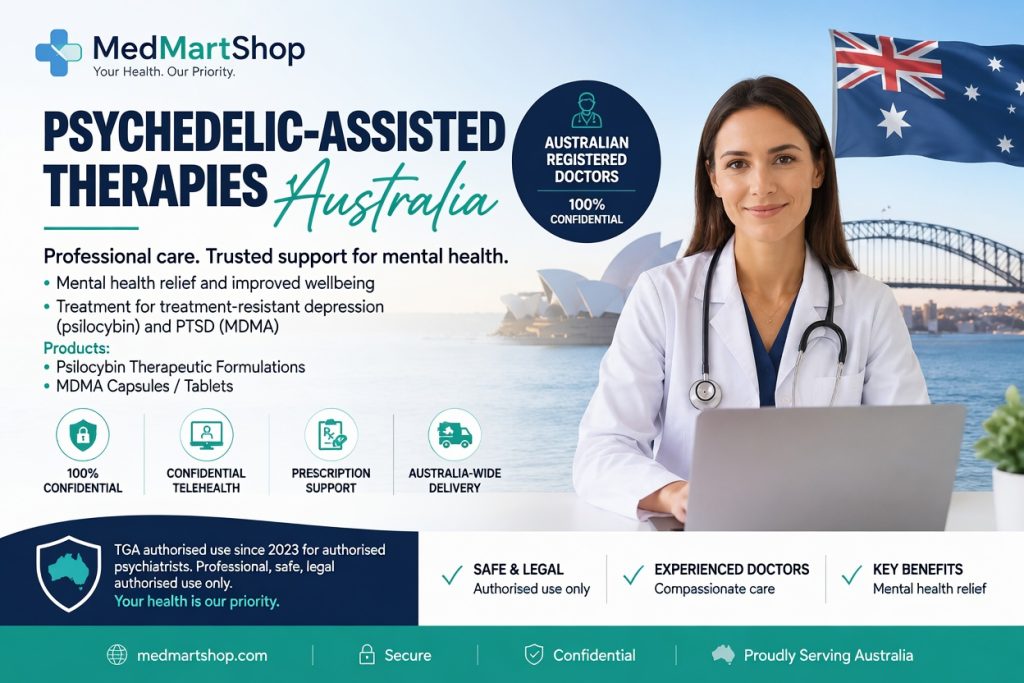
To fully understand 5-MeO-DMT’s legal status, you must contrast it with other psychedelics. In a landmark decision, Australia became the first country to allow authorized psychiatrists to prescribe psilocybin for treatment-resistant depression and MDMA for post-traumatic stress disorder . This change, effective from July 2023, represents a significant shift in Australian drug policy.
Under the TGA’s Authorised Prescriber Scheme, psychiatrists with appropriate ethical approval can administer these substances in controlled clinical settings . The TGA has even relaxed some requirements, allowing the psychiatrist to leave the room after administering the drug, provided a qualified therapist remains present .
5-MeO-DMT is not included in this authorized therapeutic framework. Consequently, no legal pathway exists for its use in clinical practice outside of research trials. This disparity highlights the compound’s earlier stage of clinical development and its continuing Schedule 9 classification.
The Risks of Unauthorized Access
Given the restrictive legal status, some individuals may consider alternative pathways. The underground psychedelic therapy scene in Australia does exist. However, accessing 5-MeO-DMT through these channels carries significant legal and safety risks.
The penalties for possession and supply are severe. Furthermore, the lack of regulation means that product quality and safety cannot be guaranteed. A 2024 study found that a significant proportion of unlicensed products either contained no active ingredient or contained dangerous adulterants. Consequently, the risks extend beyond legal consequences to potential physical harm.
The Evolving Policy Landscape
The legal status of 5-MeO-DMT exists within a broader context of psychedelic policy reform. Advocacy groups and researchers continue to push for changes. A petition has been lodged with the Australian Parliament to de-schedule naturally occurring entheogenic plants and fungi from Schedule 9 . The petition argues that substances like psilocybin, mescaline, and DMT have low physiological toxicity and demonstrate significant therapeutic potential.
However, such reforms remain uncertain and would not necessarily extend to 5-MeO-DMT, which is a synthetic compound rather than a naturally occurring plant substance. The path to legalization or medical approval for 5-MeO-DMT would likely require extensive clinical trials demonstrating safety and efficacy, followed by regulatory review and rescheduling.
Conclusion
In conclusion, 5-MeO-DMT is not legal anywhere in Australia for general use. It remains a Schedule 9 prohibited substance, criminalized in every state and territory. The only legal pathway to access exists through participation in approved clinical trials, which are highly limited and not currently recruiting.
The contrast with psilocybin and MDMA, which now have authorized therapeutic pathways, underscores 5-MeO-DMT’s more restricted status. While Australia’s psychedelic policy landscape is evolving, significant change for 5-MeO-DMT remains distant. Consequently, the responsible approach involves remaining informed about the legal framework, supporting clinical research, and prioritizing safety and legality above all else. Unauthorized possession or use carries severe penalties and significant health risks.