
Where Are Psychedelics Legal in Australia? A Guide to Therapeutic Access and State Laws
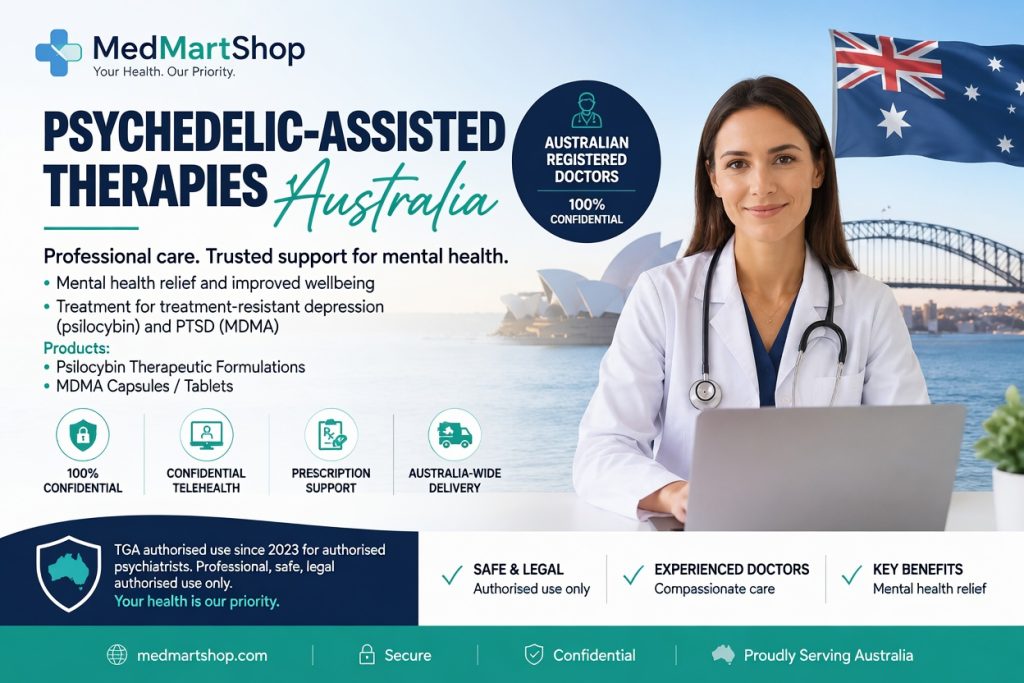
Australia has taken a pioneering step in psychedelic reform. Since July 1, 2023, the Therapeutic Goods Administration (TGA) has permitted the use of MDMA and psilocybin for specific mental health conditions within a tightly regulated medical framework . Consequently, understanding where these substances are legal and under what conditions is essential for patients, practitioners, and anyone interested in this evolving field. This guide provides a comprehensive overview of the legal landscape for psychedelics in Australia.
Therapeutic Access: Nationwide but Strictly Controlled
The legalisation of MDMA and psilocybin for therapeutic use applies nationwide under federal law, specifically the TGA’s scheduling decision . This means authorised psychiatrists across all states and territories can prescribe these substances for:
- MDMA: Post-Traumatic Stress Disorder (PTSD)
- Psilocybin: Treatment-Resistant Depression (TRD)
For these specific uses, these substances are listed as Schedule 8 (Controlled Drugs) in the Poisons Standard. For all other indications, they remain Schedule 9 (Prohibited Substances) . The TGA states that “unapproved medicines containing MDMA and psilocybine have not been evaluated by the TGA for safety, quality or efficacy” . Consequently, access is limited to a rigorous Authorised Prescriber (AP) pathway available to psychiatrists registered with the Medical Board of Australia and Fellows of the Royal Australian and New Zealand College of Psychiatrists (RANZCP) .
State and Territory Regulations for Therapeutic Use
While the TGA provides federal authorisation, each state and territory also has its own regulations governing the prescribing and supply of these substances. Therefore, authorised psychiatrists must comply with both federal and local requirements .
New South Wales: The NSW Ministry of Health requires psychiatrists authorised under the AP scheme to apply for a separate approval under Section 29 of the Poisons and Therapeutic Goods Act 1966 to prescribe and supply MDMA or psilocybin in NSW . Treatment must occur in an appropriately supervised healthcare setting, and psychiatrists must submit treatment and adverse event data at 3, 6, and 12 months after the last dose .
Other States and Territories: While specific state-based application processes exist, the core principle remains: authorised psychiatrists can prescribe these substances within a controlled medical setting. The government actively discourages advertising of psychedelic-assisted therapy services, as per the Therapeutic Goods Act 1989, which prohibits advertising Schedule 4 or Schedule 8 medicines .
The Authorised Prescriber Pathway: A Nationwide Standard
To become an Authorised Prescriber, psychiatrists must follow a consistent process across Australia:
- Hold specialist registration as a psychiatrist with the Medical Board of Australia .
- Develop a clinical treatment protocol aligned with published studies and TGA checklists .
- Apply to a registered Human Research Ethics Committee (HREC) and receive approval .
- Apply to the TGA for Authorised Prescriber status for each substance .
Once authorised, the treatment must be delivered as Psychedelic-Assisted Psychotherapy (PAP) in a medically supervised setting. Patients cannot take these medicines home . The AP psychiatrist is responsible for patient screening, informed consent, and ensuring all other TGA-approved treatment options have been considered .
The Legal Status of Other Psychedelics
It is important to clarify that Australia’s reform applies only to MDMA and psilocybin for the specified conditions. Other psychedelics like LSD, DMT, and psilocybin for other uses remain entirely prohibited. Possession, use, and supply of these substances without appropriate regulatory authority are illegal across Australia and carry significant criminal penalties .
The Future: Ongoing Debate and Potential Expansion
The regulatory framework continues to evolve. The TGA recently issued updated guidance following a consultation on AP scheme requirements, aiming to balance “facilitating appropriate access” with maintaining “strong safeguards” . Proposals to expand prescribing rights to other medical specialists, such as palliative care physicians, are under consideration, though palliative care bodies have expressed caution, citing the need for more robust evidence . Furthermore, professional bodies like the Australian Multidisciplinary Association for Psychedelic Practitioners (AMAPP) advocate for expanding the pool of eligible therapists to include psychotherapists and counsellors with demonstrated competency, arguing that the current restriction to psychiatrists and clinical psychologists is “clinically indefensible” and “worsens workforce shortages in rural and remote areas” . These debates will likely shape the future of psychedelic access in Australia.
Conclusion
Australia’s legalisation of MDMA and psilocybin for therapeutic use is a nationwide framework that provides a regulated pathway for eligible patients with PTSD and TRD. However, legal access is restricted to authorised psychiatrists operating within a strict medical setting. Other psychedelics remain illegal, and the framework continues to be a subject of debate regarding workforce, access, and expansion. For those seeking treatment, the only legal path is through discussion with a psychiatrist who is or can become an Authorised Prescriber.