
What Psychedelics Are Legal in Australia? A Guide to Current Laws and Access
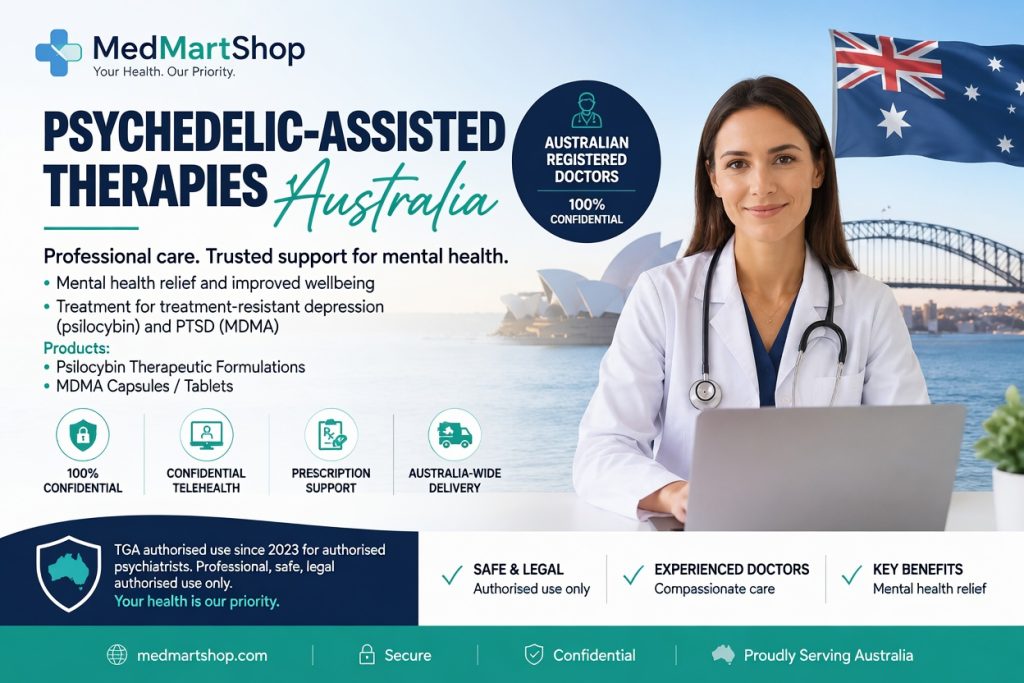
The legal landscape for psychedelics in Australia has undergone a historic transformation. Since July 1, 2023, Australia became the first country in the world to legalize the prescription of certain psychedelics for specific mental health conditions . This marks a significant shift from prohibition to regulated therapeutic use. Nevertheless, the laws remain strict and highly controlled. Consequently, understanding exactly what is legal, who can prescribe it, and under what conditions is essential for anyone exploring this option.
The Legal Framework: From Prohibition to Therapeutic Use
Previously, psychedelics like MDMA and psilocybin were classified as Schedule 9 (Prohibited Substances) in the Poisons Standard, meaning they were illegal for any use. However, the Therapeutic Goods Administration (TGA) rescheduled these two substances to Schedule 8 (Controlled Drugs) for specific therapeutic uses . This allows authorized psychiatrists to prescribe them under strict conditions.
Currently, the only psychedelics legally available for therapeutic use in Australia are:
- MDMA (3,4-methylenedioxy-methamphetamine): for the treatment of Post-Traumatic Stress Disorder (PTSD) .
- Psilocybin: the active ingredient in “magic mushrooms,” for the treatment of Treatment-Resistant Depression (TRD) .
It is crucial to emphasize that for all other indications, these substances remain Schedule 9 prohibited drugs. Furthermore, other psychedelics like LSD, DMT, and mescaline remain entirely prohibited for any use .
Strict Conditions for Legal Access
The legal pathway to these treatments is not simple and involves multiple layers of authorization. Prescriptions are limited to psychiatrists who have obtained specialist authorization under the TGA’s Authorised Prescriber (AP) scheme .
The key requirements are:
- Authorised Psychiatrist: The prescribing doctor must be a psychiatrist registered with the Australian Health Practitioner Regulation Agency (AHPRA) and hold a Fellowship with the Royal Australian and New Zealand College of Psychiatrists (RANZCP) .
- Authorised Prescriber Status: The psychiatrist must apply to the TGA and receive specific approval. This involves developing a clinical treatment protocol and getting it approved by a Human Research Ethics Committee (HREC) .
- Therapy Dyad: The treatment is not a simple pill. It must be delivered as Psychedelic-Assisted Psychotherapy (PAP) by a team. The TGA recommends a “therapy dyad” that includes the AP psychiatrist and at least one other registered health practitioner, such as a clinical psychologist, mental health nurse, or occupational therapist .
- Controlled Setting: The treatment must occur in a medically supervised environment. The site must be within 15 minutes of an accredited healthcare facility with an emergency department and have appropriate equipment and staff to manage emergencies .
Recent Developments and Ongoing Debate
The regulations continue to evolve. The TGA recently released recommendations to clarify and in some ways relax the requirements for the AP scheme . For example, the new guidance no longer requires a clinical psychologist to be present; the second therapist can be another qualified health professional . Additionally, the psychiatrist is now only required to be on-site during the drug administration, not for the entire dosing day .
These changes are designed to improve patient access, particularly in rural and regional areas. However, they have sparked significant debate. Professional bodies like the Australian Association of Psychologists (AAPi) have expressed disappointment, arguing that the new rules still unfairly exclude the majority of registered psychologists from being lead therapists . Some clinicians also worry about patient safety and the lack of standardized training for facilitators .
A Step Forward, Not a Free-for-All
Australia’s decision to legalize MDMA and psilocybin for therapeutic use is a landmark moment. It provides a new, rigorously regulated option for patients with severe, treatment-resistant mental health conditions. However, the legal access is confined to a very specific medical pathway. It is not a green light for recreational or broad therapeutic use of psychedelics. For the average person, these substances remain illegal. For eligible patients, the path forward involves discussing this option with a psychiatrist who is authorized to prescribe, ensuring the treatment is pursued safely and legally within the established framework.