
What Do Psychedelics Do? A Guide to Their Effects and Therapeutic Potential in Australia
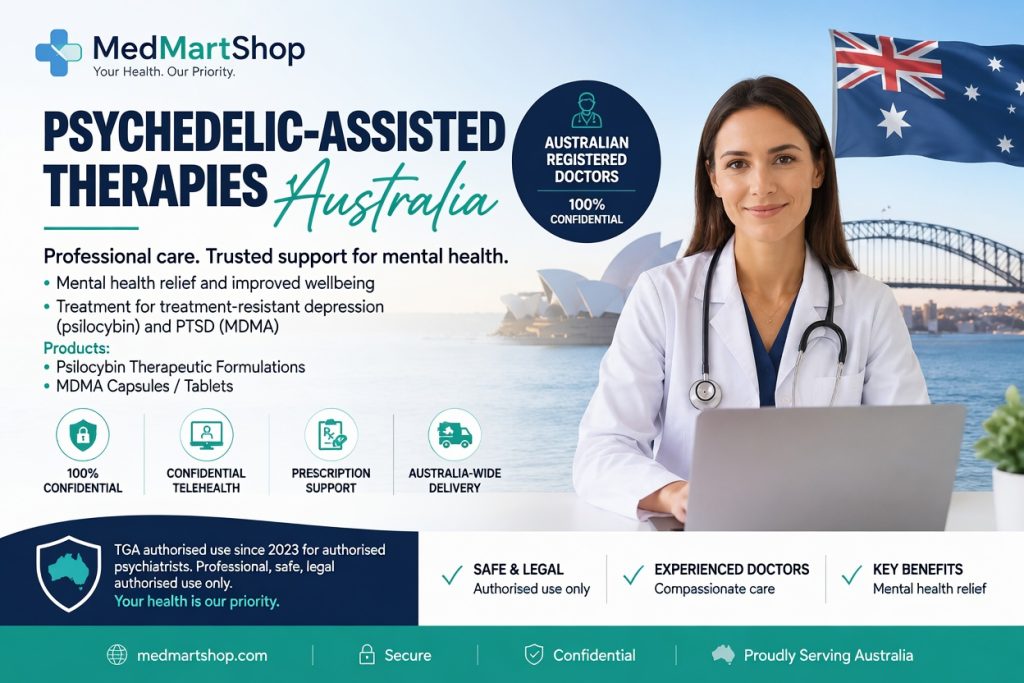
Psychedelics have captured global attention for their potential to treat mental health conditions. Since July 1, 2023, Australia has permitted the use of MDMA and psilocybin for specific mental health conditions, making it the first country to legalise psychedelic-assisted therapy within a national healthcare framework . Nevertheless, many Australians remain curious about what these substances actually do. Consequently, understanding their effects, mechanisms, and therapeutic potential is essential for anyone exploring this topic.
What Are Psychedelics?
Psychedelics are chemical compounds that temporarily create changes in brain function, including shifts in perception, thinking, and feeling, which produces an ‘altered state of consciousness’ . The word ‘psychedelic’ was coined by British psychiatrist Humphry Osmond and means ‘mind revealing’ .
Classic psychedelics include psilocybin (found in a variety of mushrooms), ayahuasca, mescaline, lysergic acid diethylamide (LSD), and dimethyltryptamine (DMT) . These substances primarily produce their effects through activation of the serotonin 2A receptor (5-HT2A) in the brain .
Entactogens like MDMA exhibit psychedelic-like properties but have a different underlying mechanism of action . MDMA is a serotonin releasing agent that also affects dopamine and noradrenaline, working through 5-HT1A receptors to attenuate fear responding in the amygdala .
How Do Psychedelics Work in the Brain?
Brain imaging studies have opened a window into the mechanisms of psychedelic-assisted psychotherapies. Several theories account for the therapeutic effects of psychedelics:
1. Disruption of the Default Mode Network (DMN): Psychedelics reduce the activity of a ‘hub’ structure in the brain called the Default Mode Network . The DMN is associated with rumination about the past and self-referential thoughts. Disruption of this network helps patients “break out” of repetitive and rigid styles of thinking, feeling, and behaving .
2. Increased Brain Connectivity: Psychedelics temporarily alter activity and increase connectivity between novel neural networks within the brain . Research from Imperial College London has linked this to enhancing openness and promoting a form of “active coping” in the brain .
3. Neuroplasticity: Classical psychedelics trigger neuroplastic changes, both functional and structural, which appear to facilitate improvements in mental health conditions . These changes include synaptogenesis—the formation of new neuronal connections .
4. Ego Dissolution: Psychedelics frequently produce profound personal or existential insights, feelings of empathy and self-compassion, and a sense of connection or unity with other people, things, and the world in general . These subjective experiences are correlated with therapeutic outcomes .
What Do Psychedelics Feel Like?
The subjective experience of psychedelics can vary widely depending on the substance, dose, setting, and individual mindset. In a therapeutic setting, psychedelics frequently produce:
- Altered perceptions: Sensory hyperacuity, visual distortions, and changes in the sense of time
- Emotional shifts: Feelings of empathy, self-compassion, and connection with others
- Existential insights: New understandings of oneself and one’s place in the world
- Ego dissolution: The breakdown of the thought-filled, controlling and rigid aspects of our minds
- Access to unconscious material: Bringing emotions, thoughts, beliefs, and traumatic memories to consciousness that may otherwise remain subconscious or hard to access
These experiences can be intense and challenging initially. However, as with any good therapy, it is through the challenging aspects of the psyche, including fear and pain, that true healing can be found .
Therapeutic Effectiveness: What the Evidence Shows
Psychedelic-assisted psychotherapies have shown impressive outcomes in treating a range of mental illnesses. Clinical trials reveal that these approaches frequently lead to remission within a few doses, with an excellent safety profile .
| Condition | Substance | Key Finding |
|---|---|---|
| Treatment-Resistant Depression | Psilocybin | 60-80% remission rate; 57% response rate |
| Depression (general) | Psilocybin | Large effect size (SMD -0.78) vs antidepressants (~-0.3) |
| PTSD | MDMA | 67% no longer qualify for PTSD diagnosis; 88% clinically meaningful reduction |
| PTSD | MDMA | Effect size 3-5 times larger than SSRIs |
| Smoking Cessation | Psilocybin | 80% quit rate at 6 months vs ~20% for standard treatments |
Australia’s first research trial using psilocybin for depression at Swinburne University found that most participants experienced a “clinically meaningful reduction in depression symptoms” after two 25mg psilocybin sessions . Lead researcher Professor Susan Rossell noted that “we’re making a substantial difference to people’s lives who may have run out of treatment options and hope” .
What Is Psychedelic-Assisted Psychotherapy?
Psychedelic-assisted psychotherapy (PAT) involves ‘talk therapy’ alongside the ingestion of a psychedelic compound. Clinicians describe three distinct therapy phases that take place over several days:
- Preparation: Patients work with therapists to build trust, understand what to expect, and set intentions.
- The Psychedelic Experience: The patient takes the medication in a comfortable setting, supported by two therapists, while music is often played to facilitate the experience .
- Integration: Patients process their experience and work to incorporate insights into their daily lives.
The non-psychedelic elements of this approach are essential for both effectiveness and safety .
Safety and Risks
While psychedelics have shown an excellent safety profile in controlled clinical settings, they carry important risks:
- Psychological risks: Some patients (10-20%) have a “really terrible time” during the experience . Persistent psychosis might involve visual disturbances, disorganised thinking, paranoia, and mood changes .
- Physical risks: Effects include increased blood pressure, loss of appetite, sleep problems, and potential interactions with other medications .
- Recreational risks: Increased risk comes mainly from use outside of controlled conditions in which the dose and formulation cannot be controlled .
According to data obtained from the TGA, no serious adverse events have been reported under the Authorised Prescriber scheme since December 2025 . Nevertheless, MDMA and psilocybin remain unapproved therapeutic goods, meaning they have not been evaluated by the TGA for safety, quality, or efficacy in the same way as registered medicines .
The Australian Context
In Australia, PAT is currently available in the private sector for patients with treatment-resistant PTSD and depression . Only psychiatrists who are Authorised Prescribers can prescribe these substances . The treatment requires a team of at least two therapists and a medically supervised setting .
The Monash University Clinical Psychedelic Lab, established in 2020, is the largest and most experienced group of psychedelic scientists, clinicians, and trainers in the country . Current research includes trials of psilocybin for Generalised Anxiety Disorder, MDMA for PTSD in veterans and first responders, and 5-MeO-DMT for Treatment-Resistant Depression .
Conclusion
Psychedelics are powerful substances that temporarily alter brain function, producing shifts in perception, thinking, and feeling. They appear to work by disrupting rigid neural patterns, increasing brain connectivity, and facilitating profound personal insights. The evidence for their therapeutic potential is compelling, particularly for treatment-resistant depression and PTSD. However, they are not for everyone, and they require careful preparation, skilled professional support, and a controlled clinical setting. For those who have exhausted other treatment options, Australia’s pioneering framework offers a legally regulated pathway to access these promising therapies.