
Medical MDMA in Australia: A Guide to Its Legal Use, Access, and Challenges
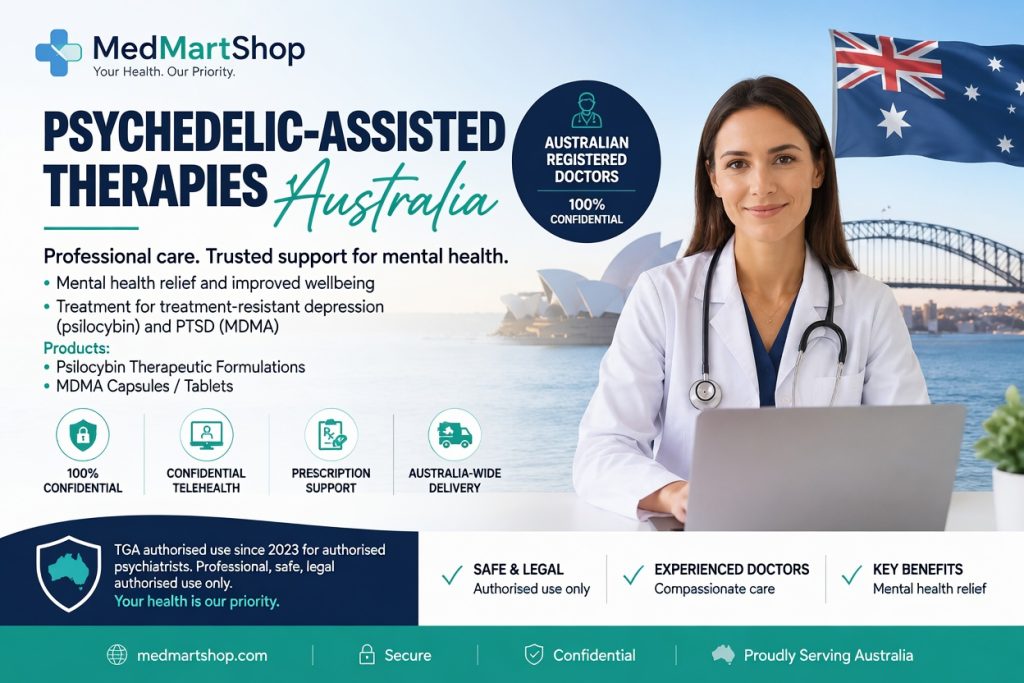
Australia has emerged as a global pioneer in medical MDMA. Since July 1, 2023, authorised psychiatrists have been able to prescribe MDMA for the treatment of post-traumatic stress disorder (PTSD) outside of clinical trials . This marked the first time a national regulator formally recognised MDMA as a medicine within a structured clinical framework . Nevertheless, access remains limited and expensive. Consequently, understanding the legal framework, the therapeutic process, and the current barriers is essential for anyone considering this treatment.
The Legal Framework: From Prohibition to Controlled Medicine
The Therapeutic Goods Administration (TGA) rescheduled MDMA from a Schedule 9 (Prohibited Substance) to a Schedule 8 (Controlled Drug) medicine for the specific treatment of PTSD . For this specific use, MDMA now has a legitimate therapeutic purpose. However, this is not a general relaxation of the law. For all other purposes, MDMA remains a prohibited substance.
The campaign for this change was led by Mind Medicine Australia, a charity that built a coalition of clinical, academic, and patient groups . The Coalition argued that current treatments for PTSD are often ineffective, with up to 50% of patients not responding to conventional therapies . The TGA’s decision, while groundbreaking, was controversial. Its own expert panel concluded that the available evidence supporting its use was of low quality .
Who Can Access Medical MDMA?
The Australian Clinical Practice Guideline for MDMA-assisted psychotherapy (MDMA-AP) provides clear recommendations . The treatment is not recommended as part of routine care. It should be limited to patients over 18 with a confirmed PTSD diagnosis and symptoms lasting at least six months . Patients must have had an adequate trial of first-line evidence-based treatments without success . They must also be at low risk of being re-exposed to trauma during treatment .
The guideline recommends against its use in patients who have been excluded from clinical trials. These include those who are pregnant or breastfeeding, have cardiovascular disease or a psychotic disorder, or are using medications that may interact with MDMA .
Only psychiatrists registered with the Australian Health Practitioner Regulation Agency (AHPRA) and Fellows of the Royal Australian and New Zealand College of Psychiatrists (RANZCP) can prescribe MDMA . They must become Authorised Prescribers (AP), which involves developing a treatment protocol, obtaining approval from a Human Research Ethics Committee (HREC), and receiving TGA authorisation .
What Does Medical MDMA Treatment Involve?
MDMA-assisted psychotherapy is not a simple pill. It is a resource-intensive, clinician-led intervention that combines pharmacology with intensive psychological care .
The Therapeutic Model
MDMA is not taken regularly. Instead, it is administered in a small number of carefully structured sessions, typically up to three, within a broader psychotherapeutic framework . The therapeutic protocol requires multiple preparation sessions, extended dosing sessions lasting 6 to 8 hours, and structured integration follow-up . The prescribing psychiatrist must remain on-site during the dosing session, and two psychologists sit with the patient .
How It Works
MDMA is a serotonin releasing agent that also affects dopamine and noradrenaline release . It acts through 5-HT1A receptors to attenuate fear responding in the amygdala, allowing PTSD patients to fully engage with their psychological treatments . As one psychiatrist explained, MDMA allows patients to “go back into past memories, including the traumatic memories, but they weren’t traumatic to deal with” . The patient can observe their experiences “as somewhat of an observer rather than being completely in there and being re-traumatised again” .
Clinical Evidence and Safety
Positive Outcomes and Safety Record
The early results have been encouraging. More than half of patients who received MDMA with psychotherapy reported significant relief from PTSD . Australian drug regulators have not recorded any serious adverse events among the nearly 200 patients who have been through the program since its inception . According to TGA data, no serious adverse events have been reported under the Authorised Prescriber scheme since December 2025 .
A clinical trial by Emyria demonstrated significant and sustained improvements, with patients experiencing an average decrease of 29.6 points in PTSD symptoms . Quality of life scores also improved, with an average increase of 23.5 points .
Despite these positive outcomes, the field remains controversial. The TGA’s decision was criticised by some experts as “too fast and too soon” . The US Food and Drug Administration (FDA) advisory committee voted against approving MDMA for PTSD in June 2024, partly due to concerns about data integrity and therapist misconduct in US clinical trials .
In Australia, the TGA has issued more than a dozen warning letters for the unlawful promotion of MDMA and psilocybin, compelling clinics and researchers to remove or amend their advertising . Concerns about professional misconduct, especially sexual boundary violations, have also been raised internationally, though no public reports have emerged in Australia .
Major Barriers to Access
Cost: The Primary Hurdle
The most significant barrier is cost. A full course of MDMA-AT at a private clinic can cost approximately $30,000 . The average cost is around $20,000 for up to three dosing sessions and 40 hours of counselling . This high cost reflects the labour-intensive nature of the treatment, which requires multiple clinicians and extended sessions . There is currently no Medicare item number that adequately captures this model of care .
Workforce and Geographic Limitations
Fewer than 50 psychiatrists are authorised to prescribe MDMA in Australia, and most practice in a handful of coastal cities . The authorised prescriber pathway creates a bottleneck. Clinicians must undertake specific training and operate within strict regulatory frameworks . The licensing process, which includes ethics panel approval, can take up to six months . This creates geographic inequality, particularly for patients in rural and regional Australia .
State Variations and Workforce Expansion
There are also inconsistent state and territory regulations. In NSW, practitioners need separate approval for every patient, and treatment must occur in a licensed private mental health facility, yet none is licensed for the required day-stay procedure . This has forced NSW patients to travel to Victoria for treatment .
Recent TGA updates have relaxed some requirements. The second attending professional no longer needs to be a clinical psychologist. It can be any support worker registered with the Psychology Board, Medical Board, or other relevant boards . Psychiatrists may also leave the clinic after drug administration . However, these changes have sparked safety debates among clinicians . The Australian Association of Psychologists (AAPi) has criticised the changes, stating that the new framework excludes approximately 70% of psychologists from providing psychedelic-assisted therapy .
Conclusion
Medical MDMA is legally available in Australia for the treatment of PTSD through a strict, regulated medical pathway. The early clinical evidence is promising, with significant symptom reductions and a strong safety record. However, access is severely limited by high costs, a small workforce, and inconsistent state regulations. For patients with treatment-resistant PTSD who have exhausted other options, this therapy represents a new frontier. However, the path to access remains challenging. This guide is for educational and research purposes only and does not constitute legal or medical advice.