
Is DMT Illegal in Australia? A Comprehensive Guide
The question of whether DMT is illegal in Australia has a clear and unambiguous answer. DMT (N,N-dimethyltryptamine) is a Schedule 9 prohibited substance in Australia. Consequently, its possession, use, manufacture, supply, and importation are illegal across every state and territory. Understanding the full scope of these prohibitions, the penalties involved, and the evolving research landscape is essential for anyone seeking clarity on this powerful psychedelic compound.
The Legal Status: Schedule 9 Prohibition
First and foremost, you must understand the foundational legal reality. DMT is classified as a Schedule 9 prohibited substance under the Australian Poisons Standard. This classification places it in the highest category of restriction. Authorities reserve this category for substances they consider to have no accepted medical use and a high potential for abuse.
Furthermore, the Customs (Prohibited Exports) Regulations explicitly list DMT (otherwise known as N,N-dimethyltryptamine). This includes plants and parts of the plants of the species Piptadenia peregrina (Anadenanthera peregrina). Therefore, its importation and exportation are strictly controlled.
Ayahuasca and DMT: The Same Legal Status
A common source of confusion involves ayahuasca, the Amazonian brew containing DMT. Many Australians wonder whether ayahuasca enjoys a different legal status than pure DMT. The answer is no.
The possession, use, manufacture, supply, importation, or exportation of ayahuasca, more specifically DMT, is illegal across all States and Territories in Australia. These activities carry significant criminal penalties. The psychoactive component of ayahuasca, DMT, is a Schedule 9 prohibited drug. Consequently, authorities have criminalised it in all States and Territories.
State and Territory Enforcement
While drug laws are enforced at the state and territory level, the approach to DMT is remarkably consistent across Australia.
New South Wales
In NSW, the Drug Misuse and Trafficking Act 1985 classifies dimethyltryptamine (DMT) as a prohibited drug. The penalties are severe.
Possession: A person found in possession of a prohibited drug in NSW is guilty of an offence. This offence carries a maximum penalty of two years imprisonment and/or a fine of $2,200.
Supply penalties escalate dramatically based on quantity:
- Small quantity (0.8 grams or 4 dosage units): $5,500 fine and/or 2 years imprisonment (Local Court), or $220,000 fine and/or 15 years imprisonment (District Court)
- Traffickable quantity (3 grams or 15 dosage units): $11,000 fine and/or 2 years imprisonment (Local Court), or $220,000 fine and/or 15 years imprisonment (District Court)
- Indictable quantity (5 grams or 25 dosage units): $11,000 fine and/or 2 years imprisonment (Local Court), or $385,000 fine and/or 15 years imprisonment (District Court)
- Commercial quantity (0.5 kg): $385,000 fine and/or 20 years imprisonment
- Large commercial quantity (2 kg): $550,000 fine and/or life imprisonment
Additionally, if a person is found in possession of DMT in quantities over the trafficable quantity (3 grams), there is a prima facie case for the offence of supply under section 25 of the Act.
Victoria, Queensland, and Other States
The pattern repeats across the country. Victoria criminalises DMT under the Drugs, Poisons and Controlled Substances Act 1981. Queensland enforces its prohibitions through the Drugs Misuse Act 1986. Tasmania, South Australia, the Northern Territory, and the ACT all have similar legislation criminalising DMT.
The Australian Capital Territory
The ACT presents a unique case that warrants clarification. Although the ACT has decriminalised the possession of small amounts of some illicit drugs, this has not extended to the possession and use of DMT. DMT remains a prohibited substance in the ACT under the Drugs of Dependence Act 1989.
Importation: A Serious Federal Offence
Importing DMT into Australia is a serious federal offence. The Australian Border Force actively monitors international mail centres for packages containing prohibited substances.
In 2021, a 34-year-old Northern Territory man was charged with allegedly importing four kilograms of DMT from Mexico. The drugs were concealed inside four packets labelled as “natural dye.” The maximum penalty for importing a commercial quantity of a border-controlled drug is life imprisonment.
More recently, a 39-year-old South Australian man with a prior conviction for a meth lab explosion admitted to importing DMT online for what he claimed were “spiritual purposes.” The final consignment intercepted by the Australian Border Force contained 19.2 grams of pure DMT. He has pleaded guilty to importing a border-controlled drug and is due to be sentenced.
The Wattle Connection: A Uniquely Australian Source
Australia’s unique flora holds significant relevance to DMT research. The Acacia genus, commonly known as wattle, is Australia’s floral emblem and one of the most widespread plant groups in the country. It has long been known that there are psychedelic properties within acacia shrubs and trees.
Researchers at NICM Health Research Institute at Western Sydney University are leading a study testing 855 species of Australian wattle for their psychedelic properties. This includes DMT and other compounds. The study is expected to take five years.
“In some of the wattle samples Low has tested so far, the DMT is more potent than the Amazonian plants traditionally associated with the compound and used to make ayahuasca,” reports The Age. Dr Mitchell Low emphasises that “most of them haven’t been tested. We know the morphology of the species, but the chemical composition is still unknown”.
Clinical Research: A Limited Legal Pathway
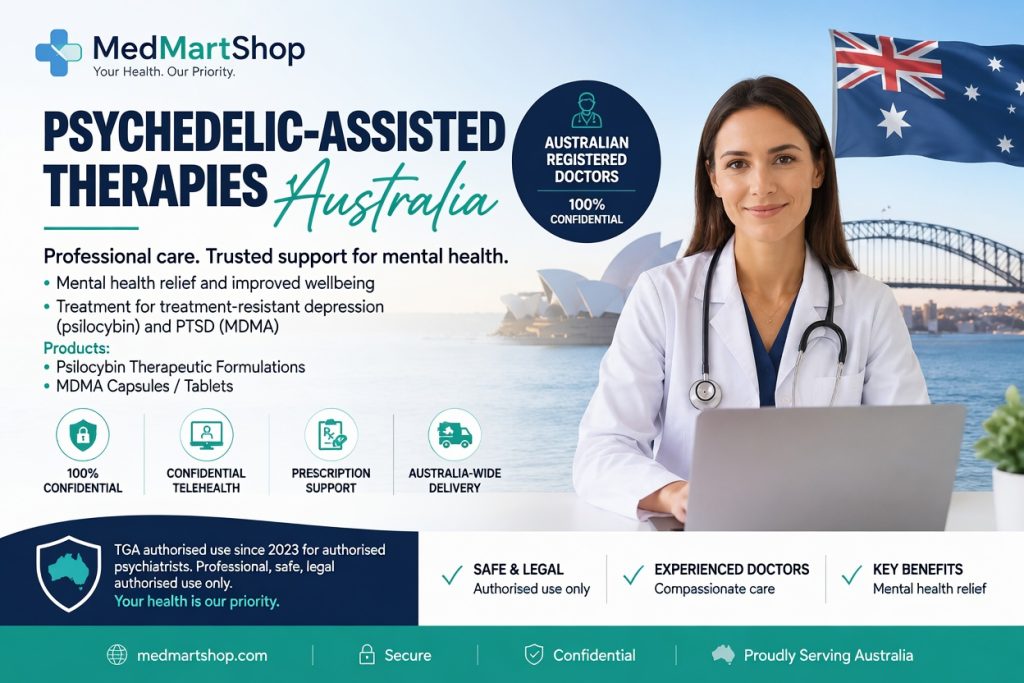
Despite the universal prohibition, a narrow pathway exists for clinical research. Australia has become a global leader in psychedelic medicine. It became the first country to allow authorised psychiatrists to prescribe psilocybin for treatment-resistant depression and MDMA for PTSD from July 2023.
DMT is not included in this authorised therapeutic framework. However, Australian clinical and institutional activity has broadened significantly. Newer local work includes a DMT-harmala phase 1 study and Australian participation in 5-MeO-DMT development.
Melbourne-based Neurala Biosciences is developing second-generation DMT-harmala alkaloid neuromedicines. Their Phase 1 proof-of-concept study was published in Scientific Reports in 2025. Lead candidate NBX-100 targets substance use disorder; NBX-200 targets depressive illness.
Dr Daniel Perkins, Senior Research Fellow at the University of Melbourne, is leading a randomised controlled trial investigating the use of a DMT-based drug for major depression and alcohol use disorder. The Australian Government funded this trial with a $1.97 million grant.
Religious Freedom Arguments
Some Australians have attempted to argue that their use of ayahuasca constitutes religious practice protected under section 116 of the Constitution. However, Australian courts have rejected these arguments.
In a 2024 NSW Civil and Administrative Tribunal case, the Tribunal found that the practices engaged in by an individual organising ayahuasca retreats did “not meet the definition of a religion for the purposes of the Constitution.” Even if they did, the Tribunal noted, “Mr Solaris could not avail himself of the constitutional protections as the practices of concern are unlawful. As noted above, both Kambo and the active component of Ayahuasca, DMT, are prohibited substances”.
Conclusion
DMT is unequivocally illegal in Australia. It is a Schedule 9 prohibited substance under the Poisons Standard. Authorities have criminalised it in all states and territories with no general therapeutic pathway. The penalties for possession, supply, and importation are severe. They range from fines and imprisonment to potential life sentences for commercial quantities.
Ayahuasca, which contains DMT, enjoys no special legal status. The ACT’s decriminalisation of some drugs does not extend to DMT. Importation is a serious federal offence carrying potential life imprisonment.
However, Australia is also at the forefront of psychedelic research. The wattle study at NICM Health Research Institute could uncover new therapeutic compounds. Clinical trials investigating DMT-based treatments for depression and alcohol use disorder are underway. These developments suggest that while DMT remains illegal today, its therapeutic potential is being actively explored within strictly regulated scientific frameworks.