
How to Get DMT in Australia: Legal Realities, Botanical Sources, and Legitimate Pathways
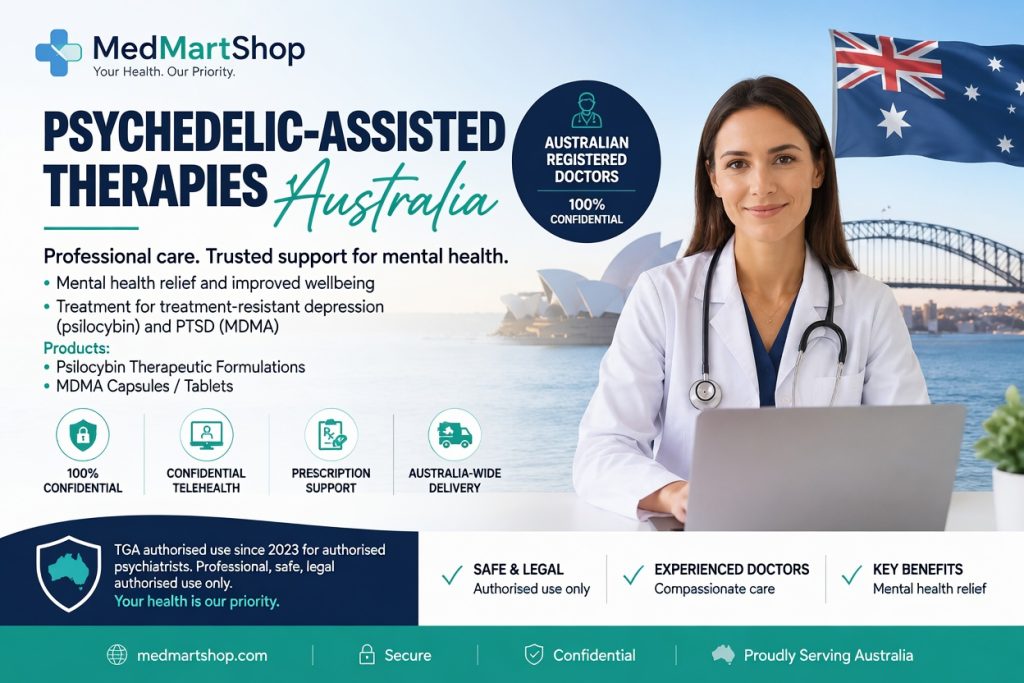
The search for how to get DMT in Australia often stems from a genuine desire for deep healing or spiritual exploration. However, the answer must begin with an unambiguous legal warning. DMT is a Schedule 9 prohibited substance in Australia, criminalised across all states and territories with no general therapeutic pathway . Consequently, no legal purchase or acquisition channel exists within the country. This guide provides a systematic overview of the Australian legal framework, the botanical sources that exist in the natural environment, the risks of black market acquisition, and the only legitimate pathways currently available.
The Australian Legal Framework: Schedule 9 Prohibition
First and foremost, you must understand a core fact. Authorities classify DMT (N,N-dimethyltryptamine) as a Schedule 9 prohibited substance under the Australian Poisons Standard . This classification places it in the highest category of restriction, reserved for substances with no accepted medical use and a high potential for abuse.
The possession, use, manufacture, supply, importation, or exportation of DMT is illegal across all States and Territories in Australia . This includes ayahuasca, the Amazonian brew containing DMT as its psychoactive component. The legal treatment is consistent and uncompromising.
Penalties escalate dramatically based on quantity. In New South Wales, possession carries a maximum penalty of two years imprisonment and/or a $2,200 fine . Supplying a small quantity (0.8 grams) can result in a $5,500 fine and/or two years imprisonment in the Local Court, or a $220,000 fine and/or 15 years imprisonment in the District Court . Supplying a commercial quantity (0.5 kg) carries a $385,000 fine and/or 20 years imprisonment . a large commercial quantity (2 kg) carries a maximum penalty of life imprisonment .
In Victoria, DMT is criminalised under the Drugs, Poisons and Controlled Substances Act 1981 . Queensland enforces its prohibitions through the Drugs Misuse Act 1986 . Tasmania, South Australia, the Northern Territory, and the ACT all have similar legislation criminalising DMT .
Notably, the Australian Capital Territory (ACT) has decriminalised small amounts of some illicit drugs. However, this policy has not extended to DMT . DMT remains a prohibited substance in the ACT.
Australia’s Native Botanical Source: Acacia (Wattle)
Australia’s native Acacia genus (commonly known as wattle) does contain DMT. Western Australia is a centre of diversity for Acacia, with 894 species naturally found across the state . The first law enforcement attendance at a DMT clandestine extraction laboratory in WA occurred in 2008. Since then, detection rates have steadily increased to the point where these labs are now the most frequently attended in WA .
DMT is typically extracted from the bark of locally occurring wattle trees through a relatively simple process, often achieved using improvised equipment . However, not every wattle tree contains DMT. Just like not all mushrooms are magic, the presence of DMT is not uniform across species .
Research has identified specific species that do contain the compound. A 2024 study screened 104 plant samples representing 79 Acacia species. The findings determined 51 DMT-containing species, 41 of which were previously unknown to contain the psychedelic . A separate 2026 pilot study screened phyllodes (modified leaves) from specimens of 148 different Acacia species and found that phyllodes from some species contained DMT, other tryptamines, β-carbolines, and phenylethylamines .
However, extraction faces significant practical obstacles. DMT content in Acacia is only 0.5–1.5% . This means extracting even a small amount requires processing large quantities of plant material. Furthermore, ringbarking trees kills them. As Dr Kelly Shepherd from the WA Herbarium explains, “From a conservation angle, ringbarking trees kills them. The law is being broken from the aspect of damaging native flora, even before you’re extracting a class A drug” .
The Black Market Reality: Risks and Enforcement
Since no legal purchase pathway exists, some individuals may consider black market sources. However, this path carries severe risks, and law enforcement actively targets DMT distribution.
Real cases demonstrate the consequences. Andreas Panas, a 39-year-old South Australian man with a prior conviction for a meth lab explosion, admitted to importing DMT online after his release from prison . His first order was placed on July 18, 2024, for $353. Further purchases followed in November 2024 for about $450 and again in July 2025 for $483 . The final consignment intercepted by the Australian Border Force contained 19.2 grams of pure DMT . He faces sentencing for importing a border-controlled drug.
The price of DMT in Australia reflects its illegal status. One source reports that the price in Australia can reach $250 AUD per gram . Another source indicates that ayahuasca ceremonies in Australia cost upwards of $600 AUD for a one-night experience . These figures demonstrate the premium Australians pay for access to a prohibited substance.
Legitimate Alternative Pathways: Clinical Research
In Australia, the only legal pathway to access DMT is participation in approved clinical trials. Australian clinical research is advancing significantly.
Swinburne University of Technology received $1,977,354.90 from the Medical Research Future Fund for a project titled “Dimethyltryptamine (DMT)-Assisted Psychological Therapy for Treatment-Resistant Major Depression, Alcohol Use Disorder, and Dual Diagnosis” . The grant term runs from January 2022 to August 2027 .
St Vincent’s Hospital Melbourne, together with the University of Melbourne and the Psychae Institute, is leading a therapeutic intervention study using DMT-assisted psychological therapy for alcohol use disorder and depression . The treatment involves a three-part process: preparation with a psychotherapist, the DMT session itself, and post-session integration .
Dr Daniel Perkins at the University of Melbourne published the first clinical trial of DMT made from Australian acacia plants, prepared in a CSIRO facility . The team’s next trial tests DMT as a treatment for alcohol use disorder and major depressive disorder . However, Dr Perkins notes that his team has moved to synthetic DMT because “Wattle contains only 0.5–1.5% DMT” and “We want this to be medicine that’s used by millions of people around the world. That would be very hard to do with a botanical product” .
Harm Reduction Considerations
For those who do access DMT through legal channels, harm reduction principles remain essential. DanceWize, a peer-based harm reduction organisation, provides guidance for safer use .
Set and Setting are crucial. The organisation recommends using DMT around people you trust and somewhere you feel safe, having a sober or experienced trip sitter present, and sitting or lying down for the experience in a place with low stimuli .
Smoking technique matters for safety. It is easy to burn DMT, and the desired vaporisation temperature is between 60–80 degrees Celsius . A recreational dose (vaporised) is approximately 5–10mg (light) to 35mg (heavy) . Puffing change joints rather than inhaling bones makes it easier to monitor dose .
Dangerous combinations should be avoided. Tramadol is well known to lower seizure threshold, and psychedelics also cause occasional seizures . Cannabis has an unexpectedly strong and somewhat unpredictable synergy with psychedelics . Stimulants like amphetamines and cocaine increase anxiety levels and the risk of thought loops .
Conclusion
The question of how to get DMT in Australia has a clear and unambiguous answer. DMT is a Schedule 9 prohibited substance, and no legal purchase pathway exists within the country. The Australian Acacia genus contains DMT, but at concentrations of only 0.5–1.5%, making extraction inefficient and environmentally destructive. Black market acquisition carries severe legal penalties, with real cases demonstrating that importation leads to prosecution.
For those seeking DMT’s therapeutic potential, clinical trials are the only legitimate pathway. Research at Swinburne University, St Vincent’s Hospital Melbourne, and the University of Melbourne is actively investigating DMT-assisted therapy for depression and alcohol use disorder . The wisest course involves remaining informed about evolving clinical research, supporting evidence-based policy reform, and prioritising safety and legality above all else.