
Get DMT in Australia: Legal Realities, Botanical Sources, and Legitimate Pathways
The search for how to get DMT in Australia often stems from a genuine desire for deep healing or spiritual exploration. However, the answer must begin with an unambiguous legal warning. DMT is a Schedule 9 prohibited substance in Australia, criminalised across all states and territories with no general therapeutic pathway. Consequently, no legal purchase or acquisition channel exists within the country. This guide provides a systematic overview of the Australian legal framework, the botanical sources that exist in the natural environment, and the only legitimate pathways currently available.
The Australian Legal Framework: Schedule 9 Prohibition
First and foremost, you must understand a core fact. Authorities classify DMT (N,N-dimethyltryptamine) as a Schedule 9 prohibited substance under the Australian Poisons Standard. This classification places it in the highest category of restriction, reserved for substances with no accepted medical use and a high potential for abuse.
The Office of Drug Control (ODC) explicitly lists DMT as a controlled substance. Importation requires both an import licence and an import permit. The possession, use, manufacture, supply, importation, or exportation of ayahuasca—more specifically DMT—is illegal across all States and Territories in Australia, carrying significant criminal penalties. The legal treatment is consistent across the country.
Penalties escalate dramatically based on quantity. In New South Wales, the Drug Misuse and Trafficking Act 1985 classifies DMT as a prohibited drug:
- Possession: Maximum penalty of two years imprisonment and/or a $2,200 fine
- Supply (small quantity, 0.8 grams): $5,500 fine and/or 2 years imprisonment (Local Court), or $220,000 fine and/or 15 years imprisonment (District Court)
- Supply (commercial quantity, 0.5 kg): $385,000 fine and/or 20 years imprisonment
- Supply (large commercial quantity, 2 kg): $550,000 fine and/or life imprisonment
In Victoria, DMT is criminalised under the Drugs, Poisons and Controlled Substances Act 1981. Queensland enforces its prohibitions through the Drugs Misuse Act 1986. Tasmania, South Australia, the Northern Territory, and Western Australia all have similar legislation criminalising DMT.
Notably, the Australian Capital Territory (ACT) has decriminalised the possession of small amounts of some illicit drugs. However, this has not extended to DMT. DMT remains a prohibited substance in the ACT.
Australia’s Native Botanical Source: Acacia (Wattle)
Australia’s native Acacia genus (commonly known as wattle) does contain DMT. Western Australia is a centre of diversity for Acacia, with 894 species naturally found across the state. However, extracting DMT from wattle faces legal, environmental, and practical obstacles.
Documented DMT-Containing Species
A 2024 study screened 104 plant samples from 79 Acacia species. It identified 51 DMT-containing species, 41 of which were previously unknown to contain the psychedelic. A 2026 WA pilot study further screened phyllodes from 148 Acacia species and found some contained DMT, other tryptamines, β-carbolines, and phenylethylamines.
Some widely cited DMT-containing species include:
- Acacia maidenii: Contains approximately 0.6% alkaloids in the bark, of which two-thirds is DMT
- Acacia phlebophylla: Contains 0.3% DMT in leaf and NMT
- Acacia obtusifolia: Contains 0.4-0.5% total alkaloids in dried bark, predominantly DMT
The Serious Consequences of Illegal Extraction
The first clandestine DMT extraction laboratory in Western Australia was discovered in 2008. Since then, detection rates have continued to rise, and these labs are now the most common type of clandestine laboratory in WA. People typically extract DMT from the bark of local Acacia trees using rudimentary equipment.
Dr Kelly Shepherd from the WA Herbarium points out that ringbarking trees kills them. Even before any drug extraction occurs, damaging native flora is an offence in itself. Furthermore, DMT content in Acacia is typically only 0.5% to 1.5%, meaning large amounts of plant material are required.
The Risks of Online Purchases: Real Cases
The internet is flooded with channels claiming to sell DMT in Australia, but real cases demonstrate the severe legal consequences.
In 2026, 39-year-old Andreas Panas began ordering DMT online after his release from prison for a meth lab explosion. His first order was placed on July 18, 2024, for $353. Further purchases followed in November 2024 (about $450) and again in July 2025 ($483). The final consignment intercepted by the Australian Border Force contained 19.2 grams of pure DMT. He used his own name, home address, and bank account to place the orders. Defence counsel stated Panas imported the drug for “spiritual purposes,” claiming he used DMT to help manage bipolar disorder and depression. He pleaded guilty to importing a border-controlled drug and faces sentencing.
In 2021, a 20-year-old man’s package from Germany was intercepted at the Brisbane International Mail Centre. It contained 433 grams of DMT, disguised as “wool, silk, cotton and linen dye concentrate.” Police subsequently found a clandestine laboratory at his Cairns residence. He faced charges of importing a commercial quantity of a border-controlled drug, with a maximum penalty of 25 years imprisonment.
Legitimate Alternative Pathways: Clinical Trials and Authorisation
In Australia, the only legal pathway to access DMT is participation in approved clinical trials, or through a DMT authority for research purposes.
DMT Authority (New South Wales)
NSW Health specifies that a DMT authority may only be issued for medical or scientific research, analysis, teaching, or training purposes. Applicants must establish policies and procedures to ensure compliance, including secure storage requirements and diversion prevention measures. Such authorities are valid for three years, with an application fee of $1,464.
This means individuals cannot obtain DMT through this pathway for personal use. The authority targets research institutions, universities, and authorised laboratories.
Clinical Research Progress
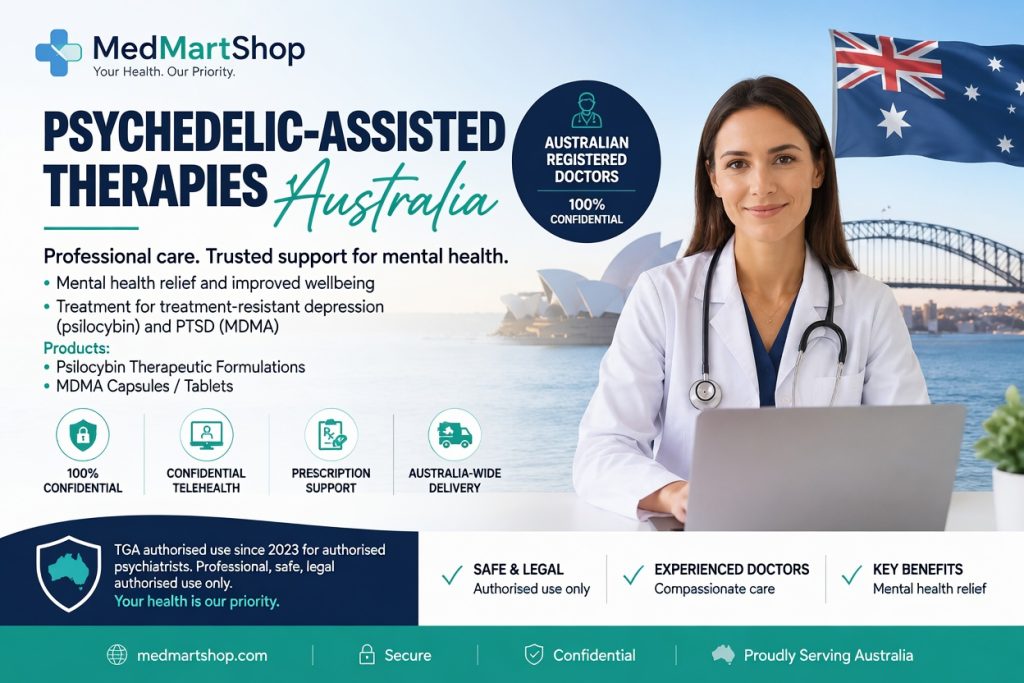
Australia’s legal psychedelic therapy framework currently covers psilocybin (for treatment-resistant depression) and MDMA (for PTSD). DMT is not included in this therapeutic framework.
However, clinical research is advancing. Swinburne University of Technology received $1,977,354.90 from the Medical Research Future Fund for a project titled “Dimethyltryptamine (DMT)-Assisted Psychological Therapy for Treatment-Resistant Major Depression, Alcohol Use Disorder, and Dual Diagnosis.” The grant term runs from January 2022 to August 2027.
Dr Daniel Perkins at the University of Melbourne published the first clinical trial of DMT made from Australian acacia plants, prepared in a CSIRO facility. The study involved nine healthy volunteers. However, Dr Perkins notes that his team has moved to synthetic DMT for future research. “We want this to be medicine that’s used by millions of people around the world,” he explains. “That would be very hard to do with a botanical product.”
Harm Reduction Considerations
For those who might encounter DMT, understanding the risks is crucial. The Alcohol and Drug Foundation confirms that DMT is most commonly smoked in Australia, with effects commencing almost straight away and finishing after around 30 minutes. Effects may include intense visual hallucinations, increased heart rate and blood pressure, anxiety and confusion, and dissociation.
If someone takes a large amount, the negative effects of DMT are more likely. These can include vomiting, inability to move, intense anxiety and confusion, overwhelming fear and paranoia, and even psychosis.
Conclusion
The question of how to get DMT in Australia has a clear and unambiguous answer. DMT is a Schedule 9 prohibited substance, and no legal purchase pathway exists within the country. Australian Acacia does contain DMT, but at low concentrations of 0.5–1.5%, and extraction faces legal, environmental, and practical obstacles. Real cases of DMT importation show offenders face up to 25 years imprisonment.
For those seeking DMT’s therapeutic potential, clinical trials and authorised research are the only legitimate pathways. DMT authorities target research institutions, and individuals cannot apply for personal use. Research at Swinburne University and the University of Melbourne is actively investigating DMT-assisted therapy for depression and alcohol use disorder. The wisest course involves remaining informed about evolving clinical research, supporting evidence-based policy reform, and prioritising safety and legality above all else.