
Depression and Ketamine in Australia: Treatment, Access, and Clinical Evidence
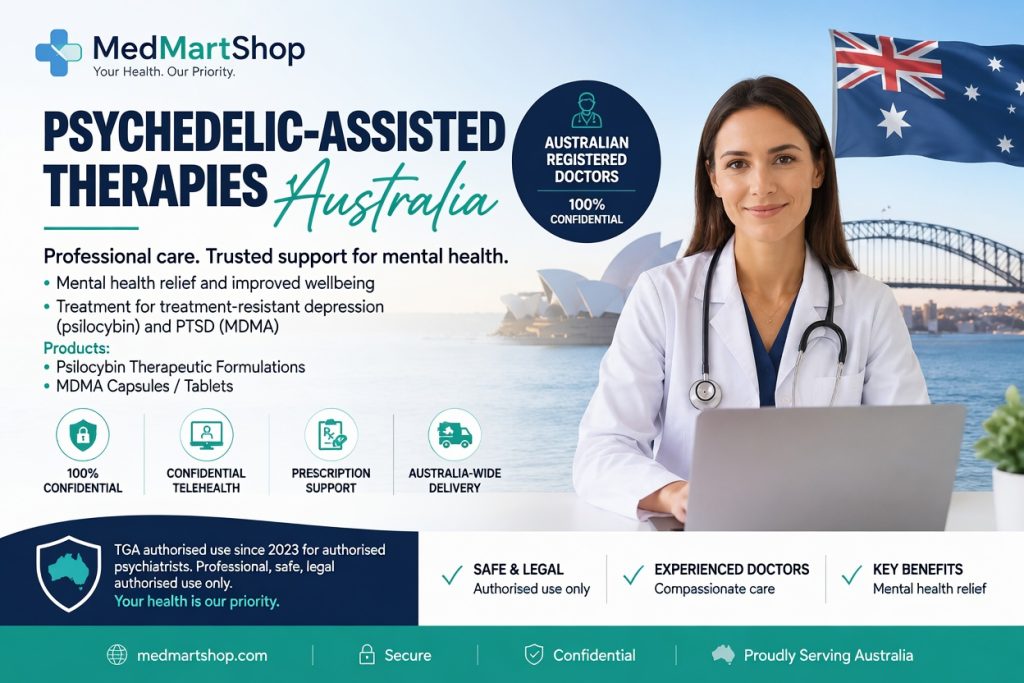
Ketamine has emerged as a significant option for Australians living with treatment-resistant depression, offering rapid relief when conventional antidepressants have failed. Esketamine nasal spray was added to the Pharmaceutical Benefits Scheme in May 2025, reducing the medication cost to $31.60 per dose for general patients and $7.70 for concession card holders. However, the supervision fees remain a substantial barrier, with patients paying around $300 per session. Consequently, while the medication has become more affordable, the full treatment cost continues to limit access for many Australians.
What Is Treatment-Resistant Depression?
Treatment-resistant depression (TRD) is defined as major depressive disorder that has not responded sufficiently to at least two different antidepressants, each administered at an adequate dose and duration. Approximately one-third of patients with major depressive disorder have TRD. For these individuals, standard pharmacological treatments have failed to provide meaningful relief, creating a need for alternative approaches.
How Ketamine Works for Depression
Most conventional antidepressants act on serotonin, noradrenaline, and dopamine systems. Ketamine works differently. It primarily increases glutamate levels in the central nervous system, a mechanism that researchers consider novel in antidepressant treatment. This glutamatergic modulation produces rapid antidepressant effects that can begin within hours rather than weeks.
Esketamine is the more pharmacologically active form of ketamine, and it can be administered through a nasal spray, offering a less invasive route than intravenous infusion. Unlike traditional antidepressants, which primarily act on serotonin and noradrenaline systems, esketamine works on the brain’s glutamate pathway. This different mechanism of action may help improve mood and cognitive flexibility in people who have not benefited from other treatments.
The Clinical Evidence: What Australian Research Shows
Australian research has provided critical evidence for ketamine’s effectiveness. The Black Dog Institute, under the direction of Professor Colleen Loo, conducted Australia’s first randomised controlled trials of ketamine for depression and remains an international leader in safety monitoring.
Clinical trial data from more than 1,600 patients showed that a greater percentage of patients given esketamine had a meaningful response compared with those who received a placebo. Real-world data have consolidated trial findings, showing clinically significant improvements in quality of life, productivity and depression severity.
Four-year safety data have shown sustained improvement in depression ratings with no significant safety concerns or adverse outcomes. Acute antidepressant effects after a single treatment have been demonstrated in clinical trials, but many people will require ongoing treatment to maintain benefits.
Esketamine: The PBS-Subsidised Option
Esketamine nasal spray (Spravato) is the only TGA-approved ketamine-based product for treatment-resistant depression. It was added to the Pharmaceutical Benefits Scheme on 1 May 2025, making it significantly more affordable.
How It Is Administered
Esketamine cannot be taken at home. Patients must self-administer the nasal spray at a registered treatment facility under the supervision of medical staff. This is because staff need to monitor for blood pressure changes and potential side effects.
The treatment schedule begins with twice-weekly administration in the first month, then once weekly in the second month, and then weekly or fortnightly after that. Once there are signs the medicine is working, treatment continues for at least six months. Esketamine must also be taken alongside a new oral antidepressant that the patient has not tried before.
Effectiveness
Clinical trial data showed that patients taking esketamine also relapsed at a lower rate, and for those who did relapse, it took longer. Professor Malcolm Hopwood noted that about 50% of patients who had not responded to two or three antidepressants did respond to esketamine.
The Cost Barrier: A Funding Loophole
Despite the PBS subsidy, a significant funding gap remains. The PBS only covers the medication itself. The administration and supervision fees are not covered by Medicare or typically by private health insurance.
Professor Hopwood estimates the cost at $300 per treatment session, representing nursing and pharmacy costs, including post-dose monitoring under the supervision of a nurse, exclusive of the drug cost.
For generic ketamine, which can be prescribed off-label, the medication costs are much lower. However, because there is no Medicare Benefits Schedule code covering the staffing costs, patients face the same clinic fees without any medication subsidy. This means generic ketamine treatment costs patients approximately $10,000 for six months.
Accessing Ketamine Treatment in Australia
Who Can Prescribe
Only AHPRA-registered psychiatrists can prescribe esketamine or ketamine for TRD. Other medical practitioners must refer patients to a psychiatrist. In New South Wales, psychiatrists must obtain approval from the NSW Ministry of Health under certain circumstances, including for continuous treatment exceeding two months.
Where Treatment Is Available
Several clinics across Australia offer ketamine treatment. Epworth Camberwell in Victoria operates one of only two esketamine clinics in the state, led by Associate Professor Ashu Gandhi with a team of eight doctors and seven specially trained nurses. Fullarton Clinic in Epping, Victoria, offers esketamine therapy as part of its advanced mental health services. Brunswick Private Hospital launched a dedicated service for TRD in February 2026, offering rTMS, esketamine (PBS listed), and IV ketamine treatment.
Eligibility
To be eligible for a prescription, a patient must have been diagnosed with treatment-resistant depression, meaning they have unsuccessfully tried at least two other antidepressant drugs first. Esketamine is not indicated for bipolar depression, and caution is advised for patients with psychotic depression.
Comparing Ketamine to Other Treatments
Professor Loo has noted that all of her patients who have had both ketamine and electroconvulsive therapy (ECT) prefer ketamine. “Ketamine doesn’t cause any memory problems, so that they’re actually more able to function,” she said. Ketamine has fewer risks and side effects than ECT and does not require general anaesthetic.
Summary
Ketamine treatment for depression in Australia has advanced significantly, with esketamine now PBS-subsidised and clinical evidence supporting its effectiveness for treatment-resistant depression. The medication is affordable at $31.60 per dose, but the supervision fees of approximately $300 per session remain a major barrier. For Australians with treatment-resistant depression, ketamine offers genuine hope, but access remains shaped by financial capacity rather than clinical need alone.