
Buy Psychedelics Australia: A Guide to Legal Access, Regulations, and Safety
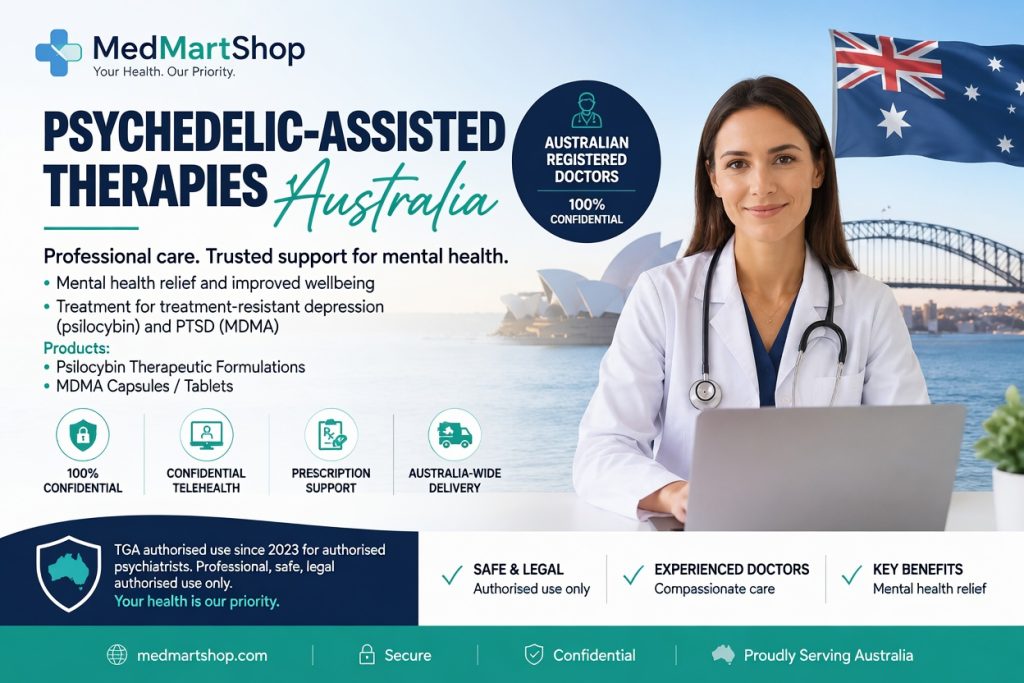
The landscape for psychedelics in Australia has undergone a historic transformation. Since July 1, 2023, Australia became the first country to legalise the prescription of MDMA and psilocybin for specific mental health conditions through a regulated medical framework . Nevertheless, this legal access is strictly controlled and only available through authorised psychiatrists. Consequently, understanding the legal pathways, requirements, and risks associated with obtaining psychedelics in Australia is essential for anyone considering these treatments.
What Psychedelics Are Legally Available in Australia?
The Therapeutic Goods Administration (TGA) has rescheduled two psychedelic substances from Schedule 9 (Prohibited Substances) to Schedule 8 (Controlled Drugs) for specific therapeutic uses . This means authorised psychiatrists can now prescribe them under strict conditions.
- MDMA (3,4-methylenedioxy-methamphetamine): Legal for treating Post-Traumatic Stress Disorder (PTSD)
- Psilocybin: The active compound in “magic mushrooms,” legal for Treatment-Resistant Depression (TRD)
For all other indications, these substances remain Schedule 9 prohibited drugs. Furthermore, other psychedelics like LSD, DMT, and mescaline remain entirely prohibited for any use. Therefore, the legal access is not a general approval but a narrow, condition-specific exception.
The Legal Pathway: How to Access Psychedelics
Accessing legal psychedelics is not like obtaining a standard prescription. The pathway is rigorous and multi-layered, designed to ensure patient safety .
Step 1: Find an Authorised Prescriber Psychiatrist
Only psychiatrists can prescribe MDMA and psilocybin . The prescribing psychiatrist must:
- Hold specialist registration as a psychiatrist with the Medical Board of Australia
- Be a Fellow of the Royal Australian and New Zealand College of Psychiatrists (RANZCP)
- Apply to the TGA to become an Authorised Prescriber (AP) for each substance
To obtain AP status, psychiatrists must develop a clinical treatment protocol and obtain approval from a registered Human Research Ethics Committee (HREC) . Consequently, the initial barrier to becoming a prescriber is significant. As of May 2026, only a limited number of psychiatrists hold AP approvals .
Step 2: The Therapy Dyad
Treatment is not a simple prescription. It must be delivered as Psychedelic-Assisted Psychotherapy (PAP) by a team of at least two therapists . This is known as the therapy “dyad.”
The TGA has clarified the composition of the dyad. It must include the AP psychiatrist and at least one other healthcare practitioner registered with a National Board . This can include an endorsed clinical psychologist, a general medical practitioner, a mental health nurse, or an occupational therapist . The AP psychiatrist is responsible for determining the qualifications of any additional therapists, such as psychotherapists or counsellors .
Step 3: The Treatment Setting
The administration of psychedelics must occur in a medically supervised and controlled environment . The TGA has specified that the site must:
- Be equipped with trained staff and equipment for medical emergencies
- Have secure storage for Schedule 8 medicines
- Be located within 15 minutes of an accredited healthcare facility with an emergency department
Patients cannot take these medicines home . Furthermore, the AP psychiatrist must be physically present on-site during the administration of the psychedelic .
Step 4: Patient Eligibility and Consent
The AP psychiatrist is responsible for patient screening and obtaining ongoing informed consent . Patients must typically have treatment-resistant conditions that have not responded to other therapies. The psychiatrist must also consider other TGA-approved treatment options before prescribing psychedelics .
Costs, Insurance, and Reimbursement
Accessing legal psychedelics in Australia can be expensive. Costs are often in the range of $30,000 for a full course of treatment . However, coverage is expanding:
- Public Coverage: The Department of Veterans’ Affairs (DVA), the National Disability Insurance Scheme (NDIS), and some WorkCover schemes now provide funding .
- Private Insurance: Medibank, Australia’s largest private health insurer, offers coverage .
Risks and Responsibilities
It is essential to recognise that MDMA and psilocybin remain unapproved therapeutic goods. They have not been evaluated by the TGA for safety, quality, or efficacy in the same way as registered medicines . Consequently, there are significant risks:
- Legal Risks: Possession of these substances without appropriate regulatory authority is illegal . The legal pathway is exclusively for therapeutic use.
- Health Risks: Potential side-effects include psychosis, anxiety, and other adverse reactions .
- Lack of Standardisation: There is no standardised training for all facilitators, which has raised safety concerns among some clinicians .
Real-World Safety Data
Despite these concerns, the real-world safety profile has been encouraging. According to data obtained from the TGA, no serious adverse events have been reported under the AP scheme since December 2025 . This clean safety profile, accumulated under regulated commercial conditions, supports the case for continued program expansion .
Conclusion
Australia offers a pioneering legal pathway to access psychedelics for mental health treatment, but this access is strictly controlled and reserved for specific conditions. The only way to legally obtain MDMA or psilocybin is through an authorised psychiatrist who can prescribe them as part of a structured therapy program. Patients seeking these treatments should discuss their options with their General Practitioner, who can refer them to a suitable psychiatrist . While the regulations continue to evolve, the core principle remains: these are powerful substances that require specialist oversight, and they are not available for general purchase or use .