
What’s MDMA in Australia? A Guide to Its Effects, Risks, and Legal Status
MDMA, or 3,4-methylenedioxymethamphetamine, is a synthetic drug with a complex place in Australian society . It is a stimulant with hallucinogenic properties . While it remains a prohibited substance for general use, a landmark change in 2023 created a strictly controlled medical exception for the treatment of post-traumatic stress disorder (PTSD) . Consequently, understanding both the illicit and therapeutic contexts is essential.
What Is MDMA?
MDMA is the chemical name for a substance that is often referred to on the street as “ecstasy” or “molly” . In Australia, common slang terms include “E,” “pingers,” “caps,” “XTC,” and “disco biscuits” . It typically comes in the form of pressed pills, which often have a logo stamped on them, or as powder, crystals, or in capsules . However, this appearance is no guarantee of quality or purity; two identical-looking pills can have very different effects and come from entirely different sources .
MDMA works by increasing the activity of key brain chemicals, including serotonin, dopamine, and noradrenaline, producing feelings of euphoria, increased energy, and emotional warmth . The drug’s effects typically begin about 20 to 60 minutes after ingestion, peak around one hour, and can last for up to eight hours .
Risks and Harms of Illicit MDMA Use
The illicit use of MDMA carries significant risks, amplified by the unregulated nature of the market.
Short-Term Risks
MDMA can cause a rapid increase in blood pressure, heart rate, and body temperature . Users may experience excessive sweating, loss of appetite, nausea, jaw clenching, and dilated pupils . In hot, crowded environments like music festivals, these effects can lead to dangerous overheating (hyperthermia) and dehydration . The Alcohol and Drug Foundation notes that environmental factors like heat can exacerbate these risks .
High-Dose MDMA
Public health authorities in NSW and Victoria have repeatedly warned about high-dose MDMA products circulating in the community . The NSW Poisons Information Centre has warned that high-dose use has been linked to death and other serious harms . A typical dose of MDMA is considered to be 70 to 100 mg, but recent testing has found products containing up to 233 mg, which is equivalent to two to three typical doses . The signs of a potential overdose include severe agitation, raised body temperature, seizures, irregular heart rhythm, confusion, vomiting, and loss of consciousness .
Unpredictable Contents
A significant harm is that the purity and potency of illicit MDMA are highly unpredictable. The contents can vary significantly even within the same batch . In Australia, tablets sold as “ecstasy” may contain little to no MDMA and can be adulterated with other substances such as methamphetamine, ketamine, or caffeine . Some tablets have also been found to contain paramethoxyamphetamine (PMA), a more toxic substance with slower onset, leading users to take a fatal second dose .
The Legal Status and Therapeutic Use of MDMA in Australia
For General Use
For all non-medical purposes, MDMA remains a Schedule 9 (Prohibited Substance) in Australia . This means it is illegal to possess, use, or supply MDMA.
The Medical Exception
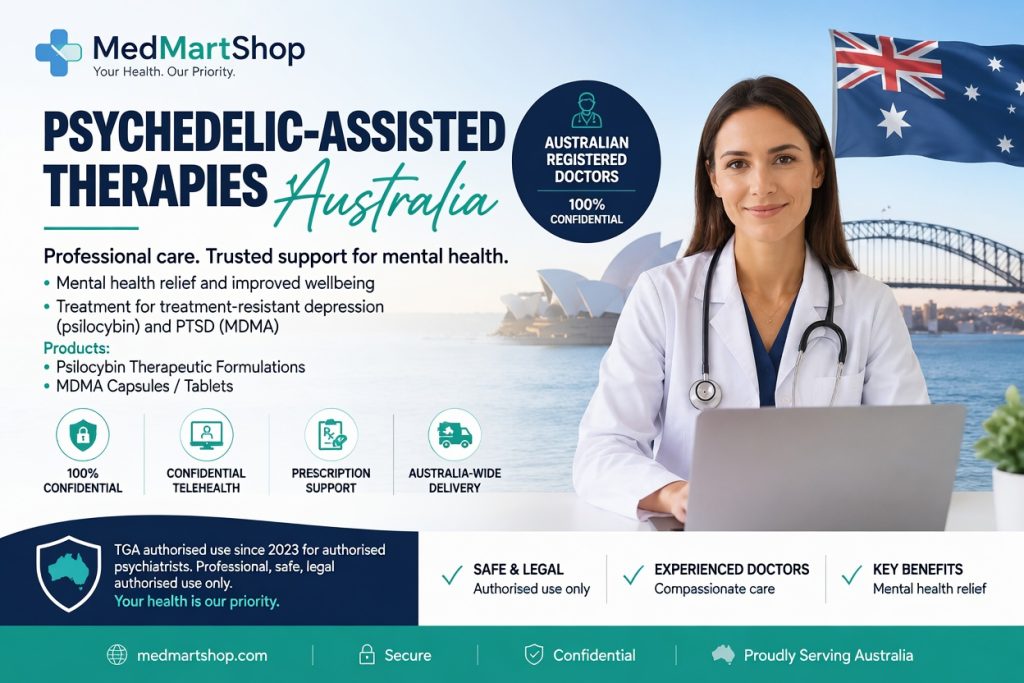
In a landmark decision, the Therapeutic Goods Administration (TGA) rescheduled MDMA to a Schedule 8 (Controlled Drug) medicine, but only for the specific treatment of post-traumatic stress disorder (PTSD) . This change took effect on July 1, 2023 .
How the Medical Pathway Works
The medical use of MDMA is strictly controlled. It cannot be prescribed as a take-home medication. It is administered as part of a structured therapy program, known as psychedelic-assisted psychotherapy (PAP), and only under the direct supervision of the prescribing psychiatrist in a hospital or clinic .
Who Can Prescribe MDMA?
Only psychiatrists who are registered with the Australian Health Practitioner Regulation Agency (AHPRA) and are Fellows of the Royal Australian and New Zealand College of Psychiatrists (RANZCP) can prescribe MDMA . They must also be approved as Authorised Prescribers (AP) by the TGA, a process that involves developing a treatment protocol and obtaining approval from a Human Research Ethics Committee (HREC) .
TGA’s Therapy Team Framework
The TGA has established a framework for the therapy team, requiring a “therapy dyad.” This must include the Authorised Prescriber psychiatrist and at least one other registered healthcare practitioner, such as a clinical psychologist, physician, mental health nurse, or occupational therapist . The AP psychiatrist is responsible for patient screening and informed consent and must be physically present during the administration of the medicine .
Veterans’ Access
The Department of Veterans’ Affairs (DVA) can now fund psychedelic-assisted psychotherapy (PAP) for eligible veterans with severe PTSD and treatment-resistant depression . However, this is considered a fourth-line treatment, and strict guidelines apply. Only TGA-authorised psychiatrists can apply for funding on behalf of veterans, and DVA will not reimburse self-funded treatment .
Conclusion
MDMA is a powerful psychoactive drug with significant risks in its illicit forms, including unpredictable potency, adulteration, and the potential for fatal overdose. However, it has also become a pioneering, legally manufactured medicine for the treatment of PTSD, accessible only through a strict, regulated medical pathway. This guide is for educational and research purposes only and does not constitute legal or medical advice. If you are concerned about drug use, please seek professional guidance.