
PTSD and MDMA in Australia: New Therapy Shows Promise, but Access Remains Limited
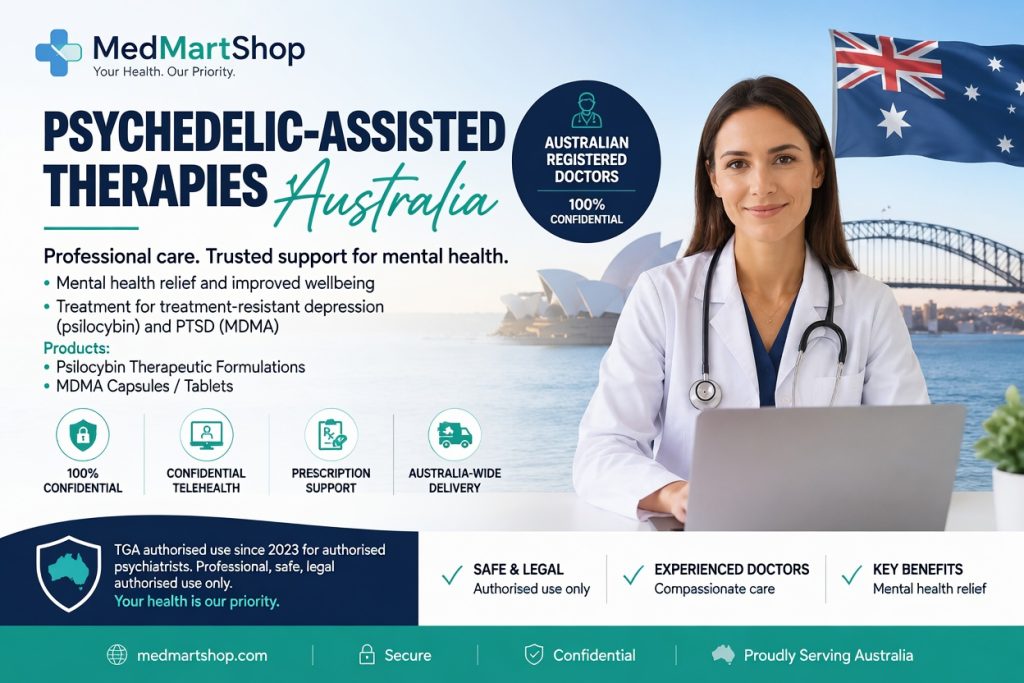
Australia has emerged as a global pioneer in mental health treatment. Since 2023, authorised psychiatrists have been able to prescribe MDMA for post-traumatic stress disorder (PTSD) outside of clinical trials . This landmark decision made Australia the first country to formally regulate MDMA as a prescription medicine for a specific psychiatric condition . Nevertheless, the early results are promising, but significant barriers to access remain . Consequently, understanding how this therapy works, who can access it, and what the challenges are is essential for anyone considering this treatment.
The Clinical Evidence: A New Hope for PTSD
The early outcomes from Australia’s MDMA-assisted therapy program have been striking. More than half of patients who received MDMA along with psychotherapy reported significant relief from PTSD . This is a notable result, given that up to 50% of people with PTSD do not respond to conventional therapies .
A clinical trial by Australian biotechnology company Emyria demonstrated significant and sustained improvements. Patients experienced an average decrease of 29.6 points in PTSD symptoms, as measured by the PCL-5 score, from baseline to the three-month follow-up . Quality of life scores also improved, with an average increase of 23.5 points .
Australian drug regulators have not recorded any serious adverse events among the nearly 200 patients who have been through the program since it started . Aggregated data from the TGA confirms that no serious adverse events have been reported under the Authorised Prescriber scheme since December 2025 . This clean safety profile, accumulated in a real-world setting, is a powerful argument for program expansion.
MDMA numbs the amygdala, the brain region responsible for emotional reaction . This allows patients to confront past traumas without shutting down emotionally. Patients can observe their experiences as an “observer” rather than being re-traumatised . Duncan Livingston, who suffered from a complex combination of PTSD and depression for more than four decades, described the treatment as letting him be “reborn again” .
The Regulatory Framework: How Access Works
The legal pathway for MDMA therapy is strictly controlled, and the TGA has recently refined the rules to expand access.
The Authorised Prescriber Pathway
Only psychiatrists registered with the Medical Board of Australia who are Fellows of the Royal Australian and New Zealand College of Psychiatrists (RANZCP) can prescribe MDMA . To become an Authorised Prescriber (AP), psychiatrists must develop a clinical treatment protocol, obtain approval from a registered Human Research Ethics Committee (HREC), and apply to and receive specific authorisation from the TGA .
Recent TGA Rule Changes
In 2026, the TGA issued a major update to the framework :
- Therapist Eligibility: The therapy team can now include psychotherapists, counsellors, social workers, and Aboriginal and Torres Strait Islander health workers, provided they meet competency requirements . This has sparked a debate, with the Australian Association of Psychologists (AAPi) arguing the new rules exclude approximately 70% of psychologists from providing psychedelic-assisted therapy .
- Treatment Settings: Therapies can now be delivered in any medically supervised environment meeting defined safety standards, not just hospitals . This aims to improve patient comfort and access in rural areas.
- Safety Standards: Clinics must be within 15 minutes of an accredited healthcare facility with an emergency department .
Australia’s first clinical practice guideline on MDMA-AP was published in 2026 . The guideline conditionally recommends against the routine use of MDMA-AP for PTSD . It should be limited to adults with PTSD symptoms for at least six months, with moderate or severe symptoms, who have failed first-line evidence-based treatments .
Strong Recommendations Against Use:
- Pregnancy or breastfeeding
- Cardiovascular disease
- Psychotic disorder
- Suicide-related distress
- Using medications that may interact with MDMA
Emerging Research and Patient Access
New research is expanding the understanding of who might benefit from MDMA therapy.
Southern Cross University has secured $3.8 million from the National Health and Medical Research Council for the world’s first clinical trial combining nature-based and arts-based interventions with MDMA-assisted therapy to treat climate-related PTSD . The trial targets survivors of the 2022 Northern Rivers floods, many of whom are still homeless and struggling with PTSD .
The Department of Veterans’ Affairs (DVA) funds psychedelic assisted psychotherapy (PAP) for eligible veterans with severe PTSD, but strict guidelines apply . This is not a first-line treatment. Only TGA-authorised psychiatrists can apply for funding, and DVA will not reimburse self-funded treatment .
The Access and Cost Crisis
Despite the progress, access to MDMA therapy remains severely limited. With an average cost of $20,000 for up to three dosing sessions and 40 hours of counselling, the therapy is largely out of reach for many of the estimated one million Australians who suffer from PTSD . Fewer than 50 psychiatrists are authorised to prescribe the drugs, and most practice in coastal cities . The licensing process can take up to six months . This creates a postcode lottery for care.
Conclusion
MDMA-assisted therapy represents a new frontier in PTSD treatment in Australia. The early clinical evidence is promising, with significant symptom reductions and a strong safety record. However, access is severely limited by high costs, a small workforce, and inconsistent state regulations. Recent TGA rule changes aim to expand access, but the debate about safety and workforce remains unresolved. For patients with treatment-resistant PTSD who have exhausted other options, this therapy offers new hope, but the path to access remains challenging. This guide is for educational and research purposes only and does not constitute legal or medical advice. If you are considering MDMA therapy, the first step is to discuss it with a General Practitioner, who can refer you to a suitably qualified psychiatrist.