
Legal MDMA in Australia: A Guide to the New Medical Framework and Its Implementation
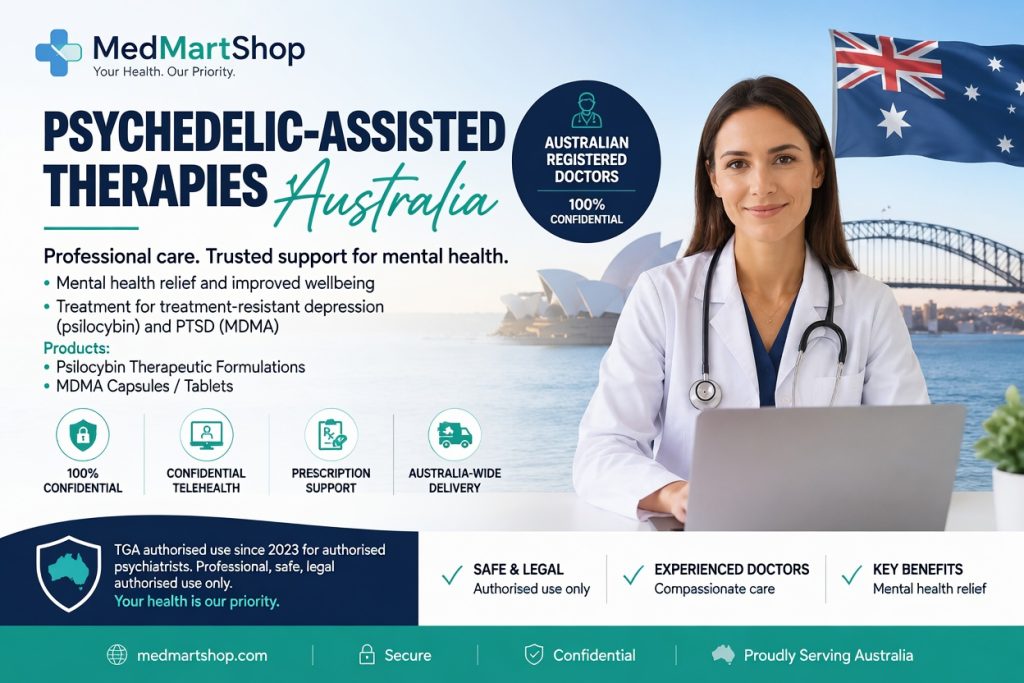
The short answer to whether MDMA is legal in Australia is nuanced. For general use, MDMA is illegal. However, a landmark change in 2023 created a strictly regulated medical pathway for its use. Since July 1, 2023, authorised psychiatrists have been able to prescribe MDMA for post-traumatic stress disorder (PTSD) outside of clinical trials . This makes Australia the first country to formally regulate MDMA as a prescription medicine for a specific psychiatric condition . This guide explains the new legal framework, how the medical pathway works, and the current state of access.
The General Law: MDMA Remains a Prohibited Substance
For all non-medical purposes, MDMA remains a Schedule 9 (Prohibited Substance) in the Poisons Standard . This means it is illegal to possess, use, or supply MDMA for recreational or general use, and these offences carry serious criminal penalties.
The Medical Exception: A Pathway for PTSD
The TGA rescheduled MDMA to a Schedule 8 (Controlled Drug) medicine exclusively for the treatment of post-traumatic stress disorder (PTSD) . This is not a general relaxation of the law. It is a tightly controlled pathway available only to patients with PTSD who have not responded to conventional treatments .
What Has Changed?
- TGA Rescheduling: In February 2023, the TGA announced its final decision to reschedule MDMA and psilocybin from Schedule 9 to Schedule 8 for specific therapeutic uses, effective July 1, 2023 .
- Legal Manufacturing: A manufacturing hub in Brisbane is now producing MDMA capsules for clinics across the country. The business, Breathe Life Sciences, tests products at multiple stages for purity and consistency .
How the Medical Pathway Works
Who Can Prescribe?
Only psychiatrists registered with the Medical Board of Australia who are Fellows of the Royal Australian and New Zealand College of Psychiatrists (RANZCP) can prescribe MDMA .
The Authorised Prescriber (AP) Process
To prescribe MDMA, a psychiatrist must:
- Develop a clinical treatment protocol .
- Obtain approval from a registered Human Research Ethics Committee (HREC) .
- Apply to and receive specific authorisation from the TGA under the Authorised Prescriber Scheme .
- There is no application fee for this process .
Strict Treatment Conditions
- Treatment Setting: Protocols that allow patients to take these medicines home are not accepted . Treatment must occur in a medically supervised setting .
- Patient Eligibility: The treatment is not recommended as part of routine care. It should be limited to patients over 18 with a confirmed PTSD diagnosis and symptoms lasting at least six months, who have had an adequate trial of first-line treatments without success .
- Contraindications: The guideline strongly recommends against its use among patients who are pregnant or breastfeeding, have cardiovascular disease, a psychotic disorder, suicide-related distress, or are using medications that may interact with MDMA .
Access, Costs, and Current Status
Clinical Practice Guideline
The world’s first clinical practice guideline on MDMA-assisted psychotherapy (MDMA-AP) for PTSD has been published. It was developed by Monash University and endorsed by the National Health and Medical Research Council (NHMRC) . The guideline does not recommend MDMA-AP as part of routine care .
- Psychiatrists: As of 2026, 40 psychiatrists hold both MDMA and psilocybin approvals outside of clinical trials .
- Patients Treated: Across Australia, about 164 patients have received MDMA-assisted therapy outside of clinical trials . In the first 18 months, the majority of patients were for MDMA (64) versus 32 for psilocybin .
- Breathe Life Sciences: This Brisbane company manufactures more than 3 million products annually for more than 300 clients. MDMA and psilocybin make up about 1–2% of its sales .
- Empax Centre: One of the few clinics offering these therapies, it has treated more than 80 patients with MDMA-assisted therapy since October 2023 .
Cost
The treatment is expensive, with courses costing tens of thousands of dollars, largely due to the labour-intensive nature of the therapy and the limited number of trained psychiatrists . The Empax Centre in Perth is one of the few clinics across the country offering the therapy .
Conclusion
Legal MDMA in Australia exists only within a strict, regulated medical framework for the treatment of PTSD. While the therapy shows promise, access remains limited to a small number of patients and psychiatrists. The general use, possession, or supply of MDMA remains illegal and carries serious criminal penalties. This guide is for educational and research purposes only and does not constitute legal or medical advice.