
How Does Australia’s Approach to Psilocybin Compare to Canada, the US, and Other Countries Loosening Restrictions?
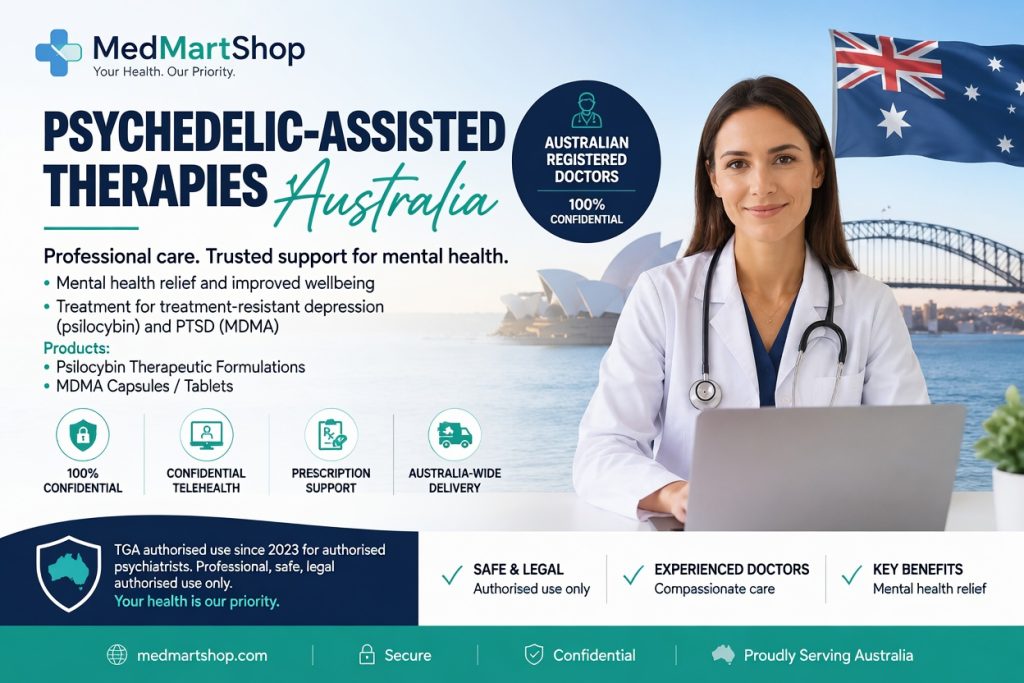
Australia has emerged as a global leader in psychedelic reform. Since July 1, 2023, the Therapeutic Goods Administration (TGA) has reclassified psilocybin as a Schedule 8 medicine, allowing authorised psychiatrists to prescribe it for treatment-resistant depression . This makes Australia the first national regulator to establish a comprehensive medical framework for psilocybin . Nevertheless, many other countries are also loosening restrictions, each taking distinct approaches. Consequently, understanding how Australia compares to Canada, the US, and other nations is essential for anyone following this evolving field.
Australia: A Pioneering National Framework
Australia’s approach is unique because it operates at a federal level. The TGA’s decision applies nationwide, creating a unified medical pathway that bypasses state-level restrictions . However, authorised psychiatrists must still comply with state and territory regulations regarding the handling of controlled substances.
Key Features of Australia’s Model:
- Structured Medical Framework: Australia is one of only a handful of jurisdictions with a formal, comprehensive medical framework for psilocybin, alongside Oregon, Colorado, Utah, New Mexico, Alberta, and the Czech Republic .
- Authorised Prescriber Scheme: Only psychiatrists who obtain TGA authorisation can prescribe psilocybin . They must have their treatment protocol approved by a Human Research Ethics Committee (HREC) .
- Strict Clinical Oversight: Treatment must occur in a medically supervised environment. Patients cannot take the medicine home .
- Limited Indication: Psilocybin is only legal for treatment-resistant depression. For all other purposes, it remains a Schedule 9 prohibited substance .
Current Status: As of 2026, Australia has established a clear regulatory pathway, but access remains limited. The treatment is expensive, and the number of authorised psychiatrists is growing but still small .
Canada: A Dual-Track System
Canada presents a more complex picture, with both federal and provincial layers of regulation. Federally, Health Canada operates a Special Access Program (SAP) that allows for restricted medical access to psilocybin in exceptional cases . This is an emergency access mechanism, not a routine prescribing pathway . Healthcare practitioners must submit patient-specific forms to Health Canada, demonstrating that conventional treatments have failed or are unsuitable .
Key Features of Canada’s Federal Model:
- Limited Access Pathway: Canada is classified as having limited or compassionate access, rather than a structured medical framework .
- Case-by-Case Approvals: Access is granted on a case-by-case basis through the SAP, similar to the US Expanded Access Program .
- Provincial Variation: Alberta has created a more structured framework, allowing psychiatrists to prescribe psilocybin within a regulated medical system . This creates a fragmented landscape where access depends on your province of residence.
Comparison to Australia: Canada’s federal SAP is more restrictive and slower than Australia’s Authorised Prescriber scheme. However, Alberta’s provincial framework is more similar to Australia’s national model, though it only applies within that province.
United States: A State-Level Patchwork
The United States has no federal approvals for psilocybin therapy. The FDA has not approved psilocybin as a medicine, and it remains a Schedule I substance federally, meaning it has no accepted medical use and a high potential for abuse . Nevertheless, several states have taken matters into their own hands, creating state-level medical frameworks.
State-Level Legalization:
- Oregon became the first state to legalize psilocybin therapy through a voter initiative (Measure 109) in 2020 .
- Colorado followed in 2022 with Proposition 122, establishing a regulated access program .
- Utah enacted a pilot program in 2024, creating a tightly regulated framework for treatment-resistant mental health conditions .
- New Mexico passed legislation in 2025, the Medical Psilocybin Act, allowing access for conditions including TRD, PTSD, and substance use disorders .
Federal-Level Access:
- Expanded Access Program (EAP): This allows for the use of investigational drugs outside of clinical trials, but it requires dual approvals from both the FDA and an Institutional Review Board (IRB) .
- Right to Try Act: Terminally ill patients can access psilocybin that has completed Phase 1 clinical trials .
Comparison to Australia: Australia’s federal framework is more cohesive and consistent than the US state-level patchwork. The US approach is fragmented, with different rules in different states, and federal prohibition creates legal uncertainty for patients and providers.
Other Countries Loosening Restrictions
Czech Republic: In a significant development, the Czech Republic enacted legislation effective January 1, 2026, allowing therapeutic psilocybin to be prescribed for certain mental disorders within a structured framework . This makes it one of the few European nations with a formal medical model, similar to Australia’s.
Denmark: Denmark established a regulatory pathway for medical access in 2022, but it operates through a licensing system that limits widespread therapeutic application . It is classified as a limited access pathway .
Switzerland: Switzerland has permitted access through case-by-case exemptions since 2014, with the Federal Office of Public Health authorising physician-approved treatments . This is also a limited access model .
Germany: Germany authorised a Compassionate Use Program (CUP) for psilocybin in 2025 for patients with treatment-resistant depression . This allows individual patients to receive psilocybin in justified exceptional cases.
New Zealand: Psilocybin remains a Class A controlled drug. However, in a significant development, the first individual approval for medical psilocybin use was granted to a psychiatrist in June 2025 under a special access pathway .
Key Distinctions: Structured vs. Limited Access
The global regulatory landscape can be broadly divided into two categories :
| Category | Description | Jurisdictions |
|---|---|---|
| Structured Medical Frameworks | Enable regulated therapeutic use within defined clinical systems. | Australia, Oregon, Colorado, Utah, New Mexico, Alberta, Czech Republic |
| Limited Access Pathways | Restrict use to exceptional circumstances, requiring individual approvals. | Canada (federal), US (federal), Denmark, Switzerland, Germany, New Zealand |
Conclusion
Australia’s approach to psilocybin is a pioneering, structured federal framework for routine psychiatric prescribing. This contrasts with Canada’s more restrictive federal SAP and the fragmented state-level patchwork in the US. Other countries, like the Czech Republic and Germany, are adopting structured or compassionate use models, reflecting a cautious but expanding global shift toward therapeutic access. Australia remains a leader in this field, but the landscape is evolving rapidly. For Australians, the law is clear: psilocybin is legal only for treatment-resistant depression, through authorised psychiatrists, in a controlled medical setting. This guide is for educational and research purposes only and does not constitute legal advice.