
Is 5-MeO-DMT Legal in the USA? What Australians Need to Know
The question of whether 5-MeO-DMT is legal in the USA is one that many Australians ask. Interest in this powerful compound continues to grow globally. The short answer is no. 5-MeO-DMT remains a Schedule I controlled substance under United States federal law. However, the American landscape is shifting rapidly. Major pharmaceutical investment and clinical research are creating new pathways. Consequently, this guide provides a detailed, Australia-oriented overview of the US legal situation. It covers the clinical developments underway and what these changes might mean for the global psychedelic landscape.
The Federal Legal Status: Schedule I Prohibition
First and foremost, you must understand the foundational legal reality. In the United States, 5-MeO-DMT is explicitly listed as a Schedule I controlled substance. This falls under the Controlled Substances Act. This classification places it in the most restrictive category. Authorities reserve this category for substances with no currently accepted medical use and a high potential for abuse.
The Drug Enforcement Administration (DEA) enforces this prohibition. Possession, distribution, and manufacture of 5-MeO-DMT are illegal at the federal level. Furthermore, the Federal Analogue Act extends control to compounds that are “substantially similar” to scheduled substances. This means even closely related tryptamines could fall under the same restrictions if intended for human consumption.
State-Level Reforms: A Patchwork Landscape
While federal law remains prohibitive, the situation at the state and local level is far more complex. Several jurisdictions have enacted reforms that decriminalize or reduce penalties for psychedelic substances. However, these measures rarely extend explicitly to 5-MeO-DMT.
Decriminalization in Cities and States
A growing number of American cities have designated personal possession of psychedelics as the lowest priority for law enforcement. These include major California cities such as Oakland, Santa Cruz, Berkeley, and San Francisco. Similarly, several Massachusetts cities—including Somerville, Cambridge, Northampton, and Easthampton—have enacted similar policies.
At the state level, Oregon and Colorado have pursued broader access models for psilocybin therapy. However, these programs focus on regulated therapeutic use rather than general legalization. New Mexico legalized a regulated market for certain psychedelics. Texas authorized research into ibogaine treatment for opioid use disorders.
Clinical Trial Pathways
The most significant development for Australians to understand is the expansion of clinical trial access. Utah recently enacted legislation authorizing a state-funded clinical study of psychedelic-assisted therapy for veterans with treatment-resistant PTSD. This research involves three investigational compounds—MDMA, psilocybin, and 5-MeO-DMT—administered within a structured therapeutic protocol.
The Utah study represents a conservative, evidence-first approach. It does not legalize psychedelic therapy or open public access. Instead, it creates a narrowly defined, tightly regulated research pathway. Institutional review boards and federal regulators oversee this pathway. This model may serve as a template for other states seeking to advance psychedelic research without broad legalization.
Pharmaceutical Investment: The Game Changer
Perhaps the most consequential development in the American landscape is the massive pharmaceutical investment in 5-MeO-DMT-based therapeutics. In July 2026, Eli Lilly agreed to acquire AtaiBeckley in a deal potentially worth $3.8 billion. This places a major pharmaceutical company behind a pipeline of psychedelic-based drugs.
The lead drug candidate is BPL-003, an intranasal synthetic form of 5-MeO-DMT. It is designed to provide rapid and durable relief from treatment-resistant depression during an in-clinic visit lasting approximately two hours. BPL-003 has received Breakthrough Therapy designation from the FDA and has begun Phase 3 activities. A Phase 2b study found reductions in depressive symptoms that persisted for months after treatment.
The federal government has actively supported this acceleration. An April 2026 executive order directed the FDA to prioritize psychedelic drugs with Breakthrough Therapy designation. It also called for expedited review of whether approved products containing Schedule I substances should be rescheduled.
The Clinical Evidence: What the Research Shows
The clinical evidence for 5-MeO-DMT is mounting. An international team published results of a Phase 2b trial testing an inhalable formulation of 5-MeO-DMT in patients with treatment-resistant depression. The study appeared in JAMA Psychiatry. It recruited 81 individuals across 16 sites in Europe. Forty participants received the active compound, while 41 received a placebo.
The trial used an escalating-dose protocol. Researchers administered 6mg, then 12mg, then 18mg in a single day. Researchers assessed drug efficacy two hours after the final dose. The results were encouraging and provided a basis for continued testing in larger trials.
Beyond depression, researchers are investigating 5-MeO-DMT for personality and trait factors. A 2026 systematic review of 48 studies found the most consistent reported pattern was increased openness and reduced neuroticism. This was especially true after psilocybin and ayahuasca. The evidence base, however, combines only 14 experimental studies with 34 observational studies. It still requires longer follow-up.
The Australian Contrast: A Different Path
For Australians, understanding the US situation provides important context for their own legal landscape. In Australia, 5-MeO-DMT is a Schedule 9 prohibited substance under the Poisons Standard. This classification is even more restrictive than the US Schedule I. It is criminalized in all states and territories with no general therapeutic pathway.
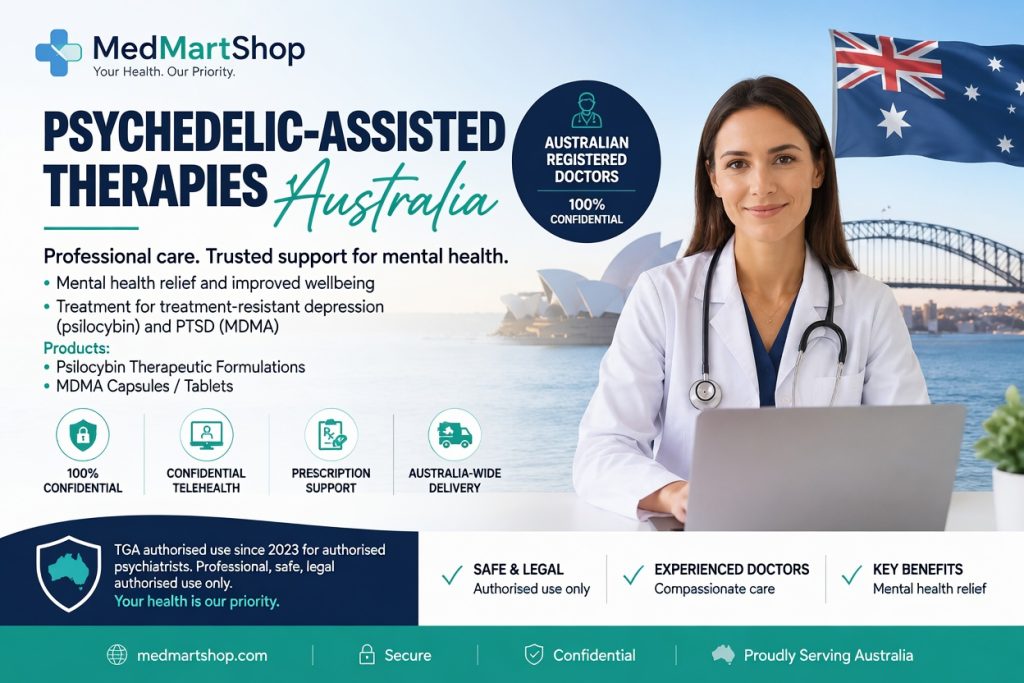
Australia has made significant strides in psychedelic medicine. It became the first country to allow authorized psychiatrists to prescribe psilocybin for treatment-resistant depression and MDMA for PTSD from July 2023. However, this framework does not extend to 5-MeO-DMT. Australian clinical and institutional activity has broadened across psychedelic research. This includes Australian participation in 5-MeO-DMT development. However, access remains confined to research settings.
The Regulatory Trajectory: What Comes Next
The trajectory of 5-MeO-DMT regulation in the United States suggests that significant changes may be on the horizon. The FDA released final guidance for conducting psychedelic clinical trials in July 2026. This establishes requirements for trained monitors, expectancy questionnaires, and independent outcome raters.
The acquisition agreement between Eli Lilly and AtaiBeckley includes contingent value rights. These are structured to pay on FDA approval and DEA rescheduling of BPL-003 within five years. This structure signals that the pharmaceutical industry anticipates a regulatory pathway. That pathway will eventually allow 5-MeO-DMT-derived medicines to be prescribed and dispensed legally.
FDA Commissioner Martin Makary indicated that the first psychedelic drug might be approved in 2026. If this occurs, it would represent a historic shift in American drug policy. It could also influence regulatory approaches worldwide, including in Australia.
Conclusion
5-MeO-DMT remains illegal under US federal law as a Schedule I controlled substance. However, the American landscape is undergoing rapid transformation. Clinical trials are expanding. Pharmaceutical investment has reached unprecedented levels. Federal agencies are actively facilitating the development of psychedelic therapeutics. For Australians, understanding these developments provides valuable context for the global trajectory of psychedelic regulation. While 5-MeO-DMT remains a Schedule 9 prohibited substance in Australia with no legal therapeutic pathway, the American experience demonstrates that regulatory landscapes can shift dramatically. This happens when compelling clinical evidence and commercial interests align. The wisest course for Australians involves remaining informed about international developments. It also involves prioritizing safety, legality, and evidence-based approaches within their own jurisdiction.