
5-MeO-DMT Legal Status in Australia: What You Need to Know in 2026
The question of whether 5-MeO-DMT is legal in Australia is one that many seekers inevitably ask. This powerful compound, often called “the God molecule,” offers profound therapeutic potential. However, its legal status remains firmly restricted. Consequently, anyone exploring this question must understand the current legal framework, the emerging clinical research, and the limited pathways to access. This guide provides a comprehensive, Australia-oriented overview of the legal status, clinical developments, and practical considerations for those interested in 5-MeO-DMT.
The Legal Status: Schedule 9 Prohibited Substance
First and foremost, you must understand a fundamental reality. 5-MeO-DMT is a Schedule 9 prohibited substance under the Australian Poisons Standard . As a structural analog of N,N-dimethyltryptamine (DMT), it falls under the highest category of restriction . Furthermore, Customs regulations explicitly list 5-MeO-DMT as a prohibited import . This means its unlicensed possession, supply, importation, or manufacture remains illegal.
The Customs (Prohibited Imports) Regulations 1956 specifically include 5-methoxy-N,N-dimethyltryptamine (otherwise known as 5-MeO-DMT) in Schedule 4 . This placement reinforces the strict controls on bringing the substance into the country. Consequently, any attempt to import 5-MeO-DMT without proper authorization carries significant legal risk.
Clinical Research: The Evolving Landscape
Nevertheless, the narrative continues to evolve. The global resurgence in psychedelic research has led to a broadening of Australian clinical and institutional activity. This includes work across psilocybin, ketamine, DMT-harmala, and 5-MeO-DMT . The Clinical Psychedelic Lab at Monash University stands at the forefront of this research .
This lab, led by Dr Paul Liknaitzky, is Australia’s first psychedelic research facility. They have conducted clinical trials using psilocybin, MDMA, and 5-MeO-DMT for depression, anxiety, post traumatic stress, and other mental health conditions . The lab focuses on investigating novel applications for psychedelic therapies, translating evidence into best clinical practice, and improving access and affordability .
However, access through clinical trials remains extremely limited. The 5-MeO-DMT-assisted therapy for Treatment-Resistant Depression trial (BPL003-201) commenced recruitment in 2023. However, recruitment for this trial is now closed as of January 2025 . This highlights the competitive and constrained nature of these research opportunities.
Therapeutic Access: What’s Available Now?
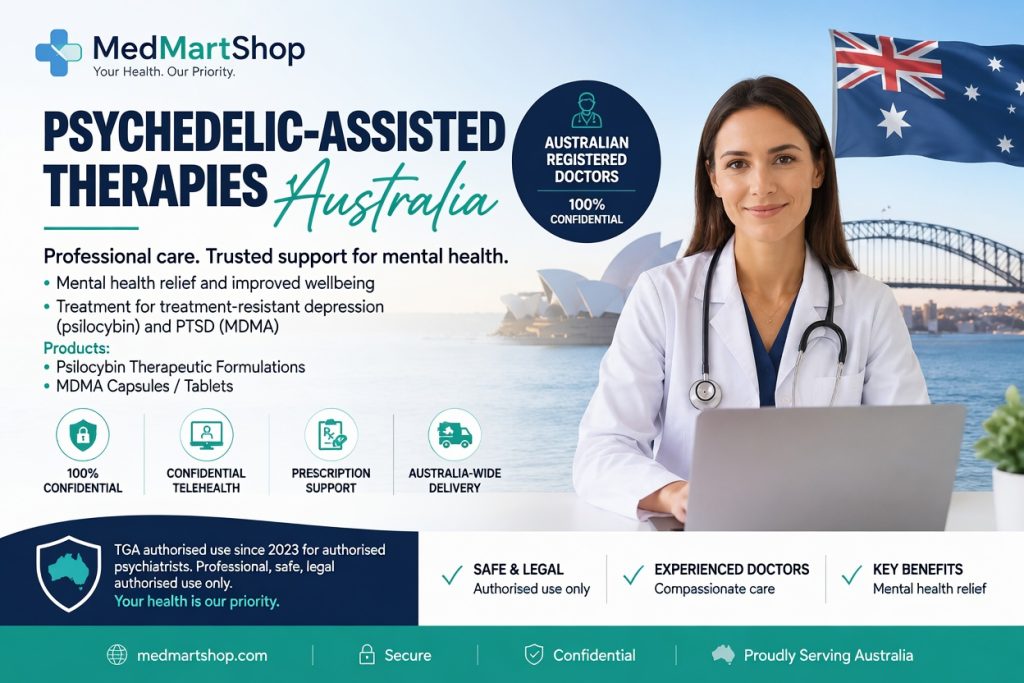
Australia has made significant strides in psychedelic medicine. In July 2023, Australia became a pioneer by authorizing psychiatrists to prescribe MDMA and psilocybin for specific mental health conditions . MDMA is approved for treatment-resistant post-traumatic stress disorder (PTSD), while psilocybin is approved for treatment-resistant depression (TRD) .
However, 5-MeO-DMT is not currently included in this authorized therapeutic framework. The TGA’s Authorized Prescriber Scheme allows psychiatrists to prescribe unregistered medicines, but this requires approval from a Human Research Ethics Committee (HREC) . For 5-MeO-DMT, no such general therapeutic pathway yet exists.
Comparing 5-MeO-DMT to Other Psychedelics
Understanding the legal landscape requires comparing 5-MeO-DMT to other psychedelic compounds. DMT, the close relative of 5-MeO-DMT, is also a Schedule 9 prohibited substance in the Poisons Standard . It remains criminalized in all states and territories with no general therapeutic pathway .
The difference lies in clinical development. Psilocybin and MDMA have reached a stage where authorized prescribing is possible. 5-MeO-DMT remains at an earlier stage of clinical research . Newer local work includes Australian participation in 5-MeO-DMT development, but this remains confined to research settings .
The Risks of Unauthorized Access
Given the restricted legal status, some individuals may consider alternative pathways. The underground psychedelic therapy scene in Australia remains active. However, accessing 5-MeO-DMT through these channels carries significant legal and safety risks. The Poisons Standard classifies it as a Schedule 9 substance, meaning severe penalties apply for unauthorized possession or supply .
Furthermore, the lack of regulation means that product quality and safety cannot be guaranteed. Some products advertised as 5-MeO-DMT may contain other substances entirely. Consequently, the risks extend beyond legal consequences to potential physical and psychological harm.
Research and Institutional Activity
Despite the legal restrictions, Australian research institutions continue to advance the field. The Clinical Psychedelic Lab at Monash University is pioneering a rigorous program of research and training in psychedelic therapies . They are exploring multiple projects within clinical psychedelic research, including investigating best practices across multiple psychedelic therapies .
The lab is affiliated with the Department of Psychiatry within the School of Clinical Sciences and the School of Psychological Sciences at Monash University . This institutional backing provides a foundation for evidence-based development of psychedelic therapies.
Conclusion
In conclusion, 5-MeO-DMT remains a Schedule 9 prohibited substance in Australia. Unauthorized possession, supply, importation, or manufacture is illegal. However, Australian clinical and institutional activity continues to broaden across psychedelic research, including 5-MeO-DMT work . The Clinical Psychedelic Lab at Monash University is conducting trials, but access is extremely limited .
The legal pathway to 5-MeO-DMT currently exists only through participation in clinical trials. For most Australians, this remains inaccessible. Consequently, the wisest course of action involves remaining informed about the evolving clinical landscape. Supporting research, advocating for evidence-based policy reform, and awaiting the outcomes of clinical trials represent the most responsible approaches. Prioritizing safety, legality, and education above all else remains paramount.