
4-AcO-DMT in Australia: Science, Legal Status, and Research
4-AcO-DMT is a Schedule 9 prohibited substance in Australia, placing it in the highest category of drug control. Unauthorised possession, use, or supply constitutes a criminal offence. Although its chemical structure closely resembles psilocybin, leading to the nickname “synthetic mushrooms,” it holds no legal status for therapeutic or recreational use under Australian law. This guide examines the science of 4-AcO-DMT, its legal reality, and the limited research space available in Australia.
What Is 4-AcO-DMT?
4-AcO-DMT (4-acetoxy-N,N-dimethyltryptamine), also known as psilacetin or O-acetylpsilocin, is a tryptamine psychedelic. Its chemical structure is the acetylated form of psilocin, the active metabolite of psilocybin.
From a pharmacological perspective, researchers classify 4-AcO-DMT as a prodrug. This means that when it enters the body, it converts into psilocin through metabolic processes, then exerts its psychedelic effects. Its mechanism of action is similar to psilocybin, acting primarily as a non-selective serotonin receptor agonist, particularly at the 5-HT2A receptor.
Subjective Effects: User Reports
According to user experience reports on platforms like Erowid, 4-AcO-DMT produces effects similar to psilocybin mushrooms, though with some notable differences.
Duration is typically 5 to 8 hours, with a peak effect around 4 hours, followed by a gentle comedown. Onset is rapid, with noticeable effects occurring approximately 20 minutes after oral ingestion.
Physical sensations are generally reported as involving far less nausea and body load than mushrooms. Users consider this a significant advantage, and many prefer it over natural mushrooms for this reason. One user described: “I received much less ‘mind fuck’ than with mushrooms, and absolutely none of the stomach discomfort that mushrooms give me.”
Psychological effects include reports of “emotional detachment,” clear thought processes, and a gentler experience than mushrooms. Visual effects become prominent at doses around 10mg, appearing as waves, with shapes that “breathe and melt.”
The Australian Legal Status: Schedule 9
The legal status of 4-AcO-DMT in Australia is unambiguous. Under the Poisons Standard, authorities classify it as a Schedule 9 prohibited substance. The rationale for this classification is that it can be considered an analogue of psilocin.
The definition of Schedule 9 is: “a substance that may be abused or misused, the manufacture, possession, sale or use of which should be prohibited by law except when required for medical or scientific research, analysis, teaching or training purposes with the approval of the Commonwealth and/or State or Territory Health Authorities.”
In the Criminal Code Regulations 2019, the controlled drugs schedule explicitly lists 4-Acetoxy-N,N-dimethyltryptamine (4-AcO-DMT) . This means authorities recognise it as a controlled substance at the federal level as well.
Real-World Consequences: No Legal Access Channel
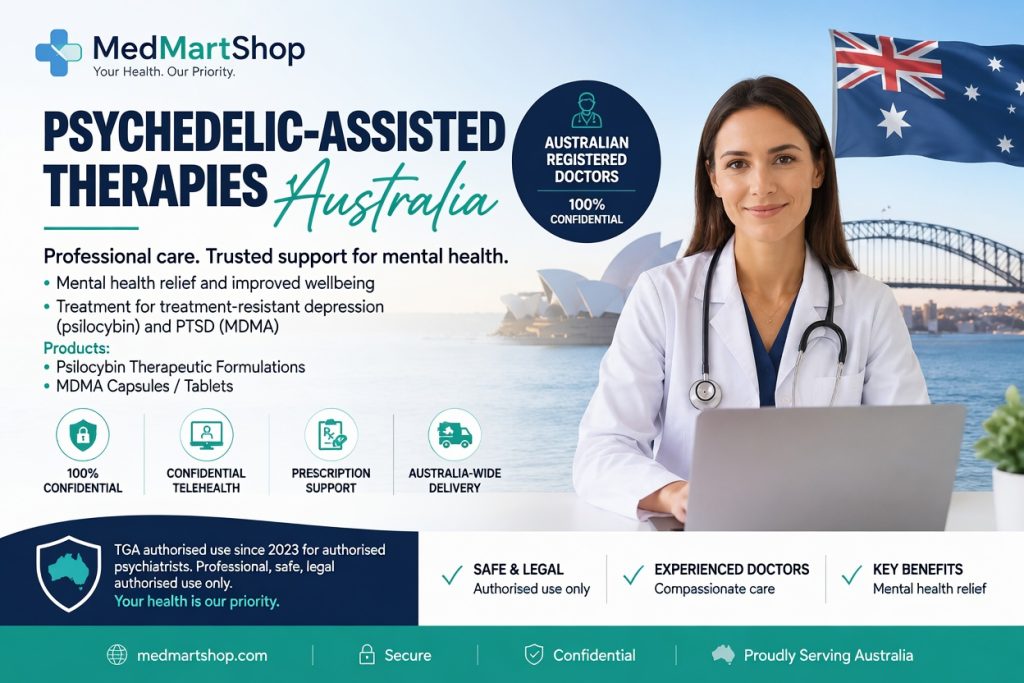
For ordinary Australians, 4-AcO-DMT has no legal access pathway. It is not included in the psilocybin and MDMA prescribing framework that took effect in July 2023. That framework covers only specific therapeutic uses prescribed by TGA-authorised psychiatrists, and 4-AcO-DMT is not included.
Occasional online listings for “research chemicals” often carry “for research use only” labels, but this does not change its legal status in Australia. Possession or use of such products may still constitute a criminal offence.
Limited Scientific Research Value
Despite its strict legal status, 4-AcO-DMT does hold some potential value in scientific research. David Nichols and colleagues improved its synthesis method in 1999 and suggested it as an economical and readily available alternative to psilocybin for pharmacological research. This is because psilocybin is more difficult to synthesise and is itself a controlled substance.
However, in Australia, any research involving 4-AcO-DMT must obtain approval from Commonwealth and/or State or Territory Health Authorities, and is limited to medical or scientific research, analysis, teaching, or training purposes.
Conclusion
4-AcO-DMT is a synthetic psychedelic chemically closely related to psilocybin. Users report similar effects but with less physical burden and shorter duration. However, in Australia, its legal status is Schedule 9 prohibited substance, placing it alongside DMT and heroin in the highest category of control. There is no legal channel for personal use, and any unauthorised possession or supply may carry criminal penalties. For researchers, it may only be used for legitimate scientific purposes with explicit approval.